
















Color Game Probability Explained: How to Read Every Roll
The Short Answer: Every Roll Starts Fresh
A color game may look simple: three six-sided dice, a familiar set of bright colors, and a betting grid that is easy to read at a glance. The difficult part is not learning the colors. It is understanding what the results do—and do not—tell you about the next roll.
In a properly operated game, each roll is an independent event. A color that has not appeared for five rounds is not automatically “due.” A color that appeared several times in a row has not used up its luck. The previous roll may change the conversation in the lobby, but it does not change the underlying probability of the next one.
That principle is the foundation of a more informed color game strategy. Instead of chasing visual patterns or copying chat-room excitement, players can evaluate the dice, the payout table, and their own spending limits before deciding whether to participate.
How the Three-Dice Color Game Works
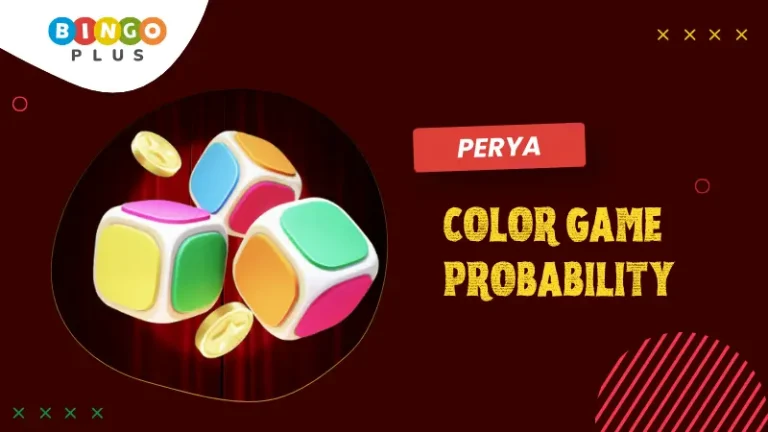
Traditional perya-style color games use three physical cubes. Each die has six equally likely faces, commonly represented by colors such as red, blue, green, yellow, white, and pink. Online versions recreate the same format with software-generated outcomes and on-screen animations.
The presentation may change from a wooden shaker to a mobile interface, but the basic probability model remains the same when the dice are fair. Each die has a one-in-six chance of showing a particular color on a single roll.
Because three dice are rolled, there are:
6 × 6 × 6 = 216 possible ordered combinations
possible ordered combinations. Some combinations contain the same color more than once, which is why a payout grid normally distinguishes between one, two, and three matching appearances.
| Result for One Selected Color | Probability | Approximate Frequency |
|---|---|---|
| Appears on at least one die | 42.13% | About 4.21 times in 10 rolls |
| Does not appear on any die | 57.87% | About 5.79 times in 10 rolls |
| Appears exactly once | 34.72% | About 1 in 2.88 rolls |
| Appears exactly twice | 6.94% | About 1 in 14.4 rolls |
| Appears on all three dice | 0.46% | About 1 in 216 rolls |
These figures describe long-run probability, not a schedule. They do not mean that a selected color must appear after a certain number of misses.
The Core Color Game Probability Formula
For one selected color, a single die has a 1/6 chance of showing that color. Therefore, the chance that the die does not show the selected color is 5/6. With three dice, the probability that none of them shows the selected color is:
(5/6) x (5/6) x (5/6) = 125/216 = 57.87%
To find the probability that the selected color appears at least once, subtract the probability of zero appearances from 100%:
1 – (5/6)³ = 91/216 = 42.13%
So, under the standard three-dice model, a selected color has a 42.13% probability of appearing at least once on any individual roll. This is one of the most useful color game dice odds to understand because it shows why a color can miss several consecutive rounds without anything unusual happening.
Why “Overdue” Colors Are a Trap
Suppose blue is absent from five consecutive rolls. It may feel increasingly likely to appear, especially when players see other colors repeating. However, the probability of blue appearing on the next roll is still 42.13% under the same rules and a fair three-dice setup.
The mistake is known as the gambler’s fallacy: the belief that independent random events must compensate for earlier results. Randomness can produce clusters, gaps, and repetitions. A streak is evidence of what has already happened, not a reliable forecast of what comes next.
Payouts Matter as Much as the Odds
Probability is only one part of evaluating a color game bet. The other major factor is the payout. A larger multiplier does not automatically mean that a bet offers better value. The potential reward needs to be considered together with how rarely the event occurs and whether the displayed payout includes the original stake.
For one selected color, the probability of each exact number of appearances is:
| Number of Appearances | Calculation | Probability |
|---|---|---|
| Exactly one | 3 × (1/6) × (5/6)² | 34.72% |
| Exactly two | 3 × (1/6)² × (5/6) | 6.94% |
| Exactly three | (1/6)³ | 0.46% |
| At least one | 1 − (5/6)³ | 42.13% |
The “at least one” result includes exactly one, exactly two, and exactly three appearances. Online and physical color games may use different payout conventions. Some tables display a return that includes the original stake, while others describe only the net profit. Some games pay differently depending on whether the selected color appears once, twice, or three times.
For that reason, always read the specific rules and payout table for the game you are playing instead of assuming that every color game uses the same payout structure.
A Simple Expected-Value Check
Expected value, or EV, is a mathematical way to estimate the average theoretical outcome of a wager over a very large number of identical trials.
For a wager with several possible outcomes, you can calculate EV by multiplying each possible net outcome by its probability and adding the results:
EV = (Probability 1 x Net Outcome 1) + (Probability 2 x Net Outcome 2) + …
For a real color game, use the actual net payouts shown in the game’s rules and include the losing outcome in the calculation.
Expected value does not predict what will happen in one session. A wager can win several times in a short period even when its long-run expected value is negative.
If the theoretical expected value is below zero, the difference represents the mathematical disadvantage built into the wager over the long run.
No betting pattern can remove that disadvantage from a fixed game of chance.
Physical Dice Versus Digital RNG
Physical dice and digital random number generators create different player experiences, but the relevant question is whether the outcome process is fair, independently tested, and clearly explained.
A physical setup depends on the dice, shaker, surface, and handling conditions. A digital setup uses software to select an outcome and then presents it through animation. In both cases, colorful visuals can encourage the brain to search for patterns. Animation speed, sound effects, and chat activity may affect emotion, but they should not be treated as probability signals.
When evaluating an online color game, pay attention to:
- Clearly explained game rules
- Transparent payout terms
- Available responsible-gaming tools
- Information about the operator and its regulatory status where applicable
If an operator makes a claim about licensing or regulation, check the relevant official source rather than relying only on promotional statements.
A Practical Way to Read the Betting Grid
A betting grid is easier to evaluate when it is separated into three questions:
- What event does this position represent? Determine whether the bet wins when a color appears once, twice, three times, or at least once.
- What is the net payout? Check whether the displayed multiplier includes the returned stake and whether any conditions or limits apply.
- What is the probability of that event? Use the rules of the specific game rather than a number borrowed from another table.
This approach prevents a common error: comparing a large multiplier with a small multiplier without comparing the chance of winning each bet. A triple match may look attractive because its payout is larger, but it occurs only about 0.46% of the time for one selected color in the standard three-die model.
Why Streak Chasing Can Damage a Budget
Short-term variance can make ordinary outcomes feel personal. A player may increase a stake after several losses, switch colors after a visible streak, or continue playing longer than planned to recover money. Each decision can be emotionally understandable while still making the overall session harder to control.
A safer approach is to establish rules before opening the game:
| Before the Session | During the Session | After the Session |
|---|---|---|
| Set a fixed entertainment budget. | Keep wagers within the planned amount. | Record what you spent without trying to recover it. |
| Decide how long you intend to play. | Ignore pressure from chat and crowd predictions. | Stop when the activity is no longer enjoyable. |
| Treat the budget as entertainment spending. | Do not increase stakes impulsively after losses. | Consider whether your limits were realistic. |
These are safeguards, not a winning system. Their purpose is to reduce avoidable harm and keep the activity within a clearly defined entertainment boundary.
How Chat Rooms and Crowd Energy Influence Decisions
A busy lobby can create the impression that everyone else knows something you do not. Messages such as “red is hot” or “blue must be next” turn random results into a shared story. That story can trigger fear of missing out and encourage decisions based on social pressure rather than the game rules.
The most reliable response is to separate information from noise. Official rules, payout terms, and responsible-gaming controls are relevant information. Predictions from strangers, screenshots of isolated wins, and claims that a color is guaranteed are not reliable evidence of the next roll.
If the chat makes it harder to follow your limits, mute it or leave the session. Protecting your attention is part of protecting your budget.
A Responsible Color Game Checklist
Before playing an online color game, confirm that you understand the following:
- The game uses three dice or an equivalent clearly explained random-outcome system.
- The rules define how one, two, and three matching colors are paid.
- The payout display explains whether the stake is included in the return.
- The platform provides visible spending, deposit, time, or self-exclusion controls where applicable.
- You have set a budget that will not affect essential expenses.
- You are not playing to recover a previous loss.
- You can stop without feeling pressured by a streak, promotion, or chat message.
If any of these conditions are missing, pause before placing a wager. A clear explanation of the game is more valuable than a dramatic bonus banner.
Use Probability to Stay Grounded
The most useful color game strategy is not a secret color sequence. It is a clear understanding of independent rolls, exact probabilities, payout terms, and personal limits.
In the standard three-dice model, a selected color appears at least once 42.13% of the time, while it is absent 57.87% of the time. Exactly three matches occur only about 0.46% of the time. Those numbers help explain why gaps and streaks are normal, but they cannot predict a particular result.
Approach the game as chance-based entertainment. Read the rules, compare the payout with the probability, ignore claims that a color is “due,” and stop when your budget or time limit is reached. A calm session is a better outcome than chasing a pattern that randomness never promised.