


Sports Betting looks more analytical than casino play. A bettor studies teams, injuries, form, odds movement, and match context. That makes the activity feel controlled. The risk is that many users focus on the match and ignore the platform.
That is where problems start.

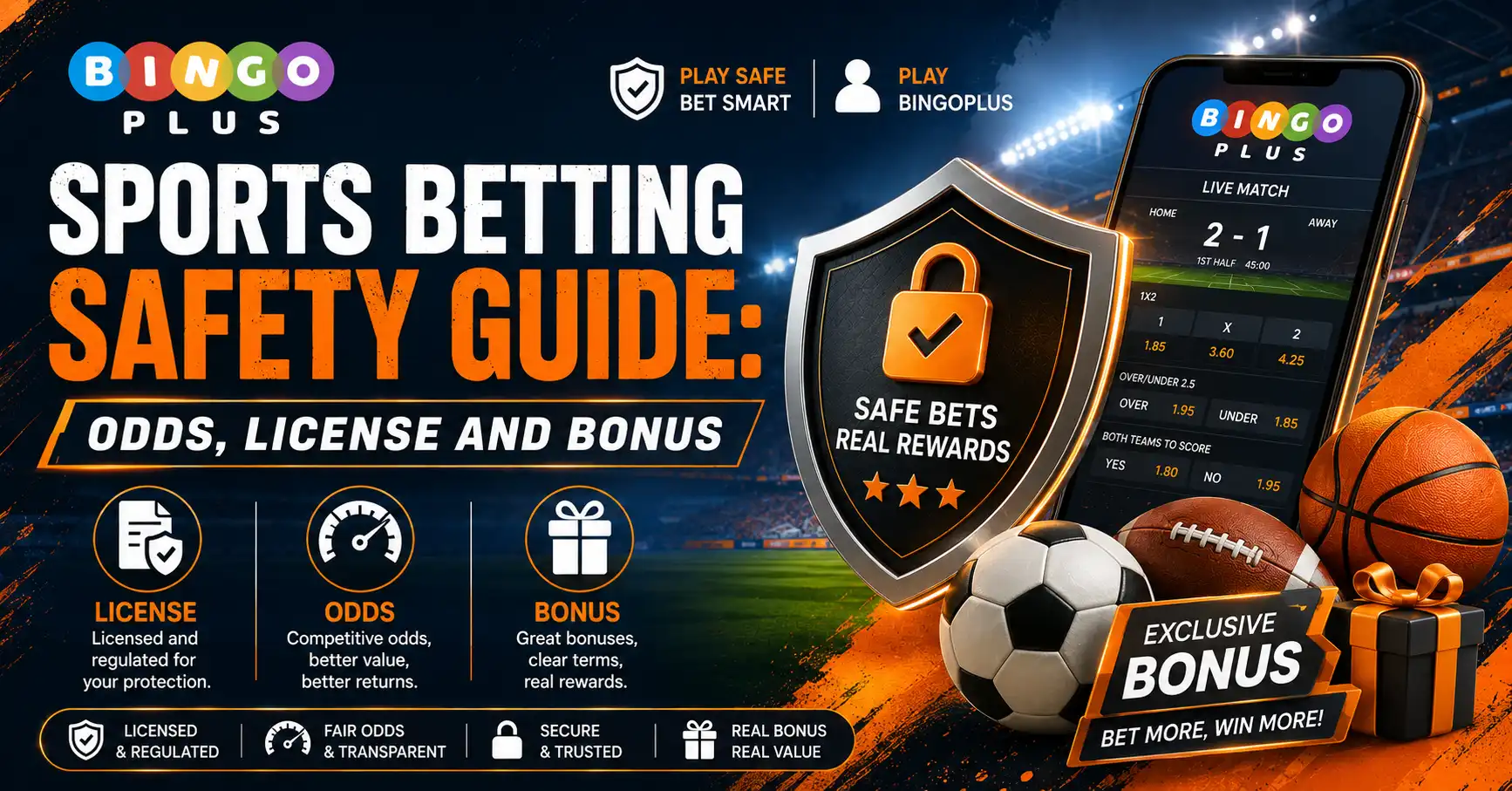
A weak sportsbook can delay withdrawals, change bonus terms, push users to fake domains, or require surprise KYC after a winning streak. I judge every Sports Betting platform by three standards:
- Verified license and official domain: Philippine users should check the platform against the official PAGCOR service provider and registered domain list.
- Fair odds and clear market rules: spreads, totals, moneyline, parlays, live betting, settlement rules, and void policies must be easy to read.
- Withdrawal safety: KYC, payment channels, cashout limits, and bonus wagering rules must be visible before deposit.
- Click to spin for free and win the ultimate prize!
PAGCOR’s “List of Service Providers and Registered Domains/URLs” is issued by its Electronic Gaming Licensing Department and lists service providers, game offerings, brands or online gaming platforms, and registered domains/URLs as of 18 March 2025.
Bet responsibly, live a wonderful life. Sports Betting involves financial risk, and every player is responsible for their own choices.
What Is Sports Betting?
Sports Betting means placing wagers on sports events, player outcomes, team results, or market-based predictions.
Common sports betting markets include:
- Moneyline: pick the winner.
- Point spread: bet on a team to win or stay within a margin.
- Totals / Over-Under: bet whether combined score goes over or under a set number.
- Parlay: combine multiple selections into one bet.
- Live betting: bet while the match is ongoing.
- Player props: bet on individual player statistics.
- Futures: bet on long-term outcomes such as champion, MVP, or season record.
- Handicap betting: common in football, basketball, and esports-style markets.
- Cashout betting: settle a bet early if the platform allows it.
Sports Betting is not the same as slots or live casino games. It does not use RTP in the same way.
The equivalent concepts are:
- Odds margin
- Implied probability
- Overround
- Vig / juice
- Market liquidity
- Settlement accuracy
- Line movement
- Bet limit
- Void rule
A good bettor understands both the sport and the sportsbook.
Authority License and Safety: Why PAGCOR Verification Matters
For Philippine users, PAGCOR licensing and registered domain verification are practical safety checks.
The PAGCOR document lists each entry by:
- Service provider
- Game offering
- Brand or online gaming platform
- Registered domains or URLs
The list includes sports betting among several approved game offering categories for multiple service providers. For example, PAGCOR’s list shows Sports Betting under entries such as Ascend Innovation Technology Corporation, Bet Bingo Philippines Inc., Blue Phoenix Tech Solutions Corp., CD Extreme OPC, Cyber Dot Com Technology Corp., Gavin Ventures Inc., and other listed providers.
This matters because sportsbook users often enter through:
- Search ads
- Social media posts
- App download pages
- Agent links
- Bonus landing pages
- Telegram or Messenger referrals
- Mirror domains
Some are legitimate. Some are not.
The official domain check is not optional.
What a PAGCOR-Registered Domain Helps Confirm
A PAGCOR-registered domain does not mean every bet is profitable. It does not remove betting risk.
It helps verify that a domain is connected to a regulated online gaming structure.
That gives users a stronger basis to check:
- Brand identity
- Service provider
- Game offering category
- Approved access route
- Regulatory trace
- Payment accountability
- KYC expectations
- Responsible gaming framework
A sportsbook can have sharp odds and still be unsafe if the domain is not verified.
Why License Quality Differs by Region
Sportsbooks may reference different licensing jurisdictions.
Common examples include:
- PAGCOR: highly relevant for Philippine-facing platforms.
- UK Gambling Commission: strict UK-focused consumer protection rules.
- Malta Gaming Authority: commonly used by European operators.
- Gibraltar licensing: used by some established international betting firms.
- Isle of Man licensing: known in international online gaming.
- Curaçao licensing: common offshore structure, but operator quality varies.
For a Philippine user, I give the most weight to whether the actual brand and access domain match the local regulatory record.
A foreign license alone does not prove that the sportsbook is authorized for the Philippine market.
Sportsbook Red Flags I Avoid
I avoid any sports betting site with these signals:
- No visible license information
- No legal operator name
- No domain match with a regulator list
- No KYC policy
- No withdrawal limit page
- No bet settlement rules
- No void or abandoned-match policy
- No responsible gaming notice
- Odds that look too good without explanation
- Bonus terms hidden behind vague copy
- Random APK download pages
- “Guaranteed win” or “fixed match” claims
- Customer support only through private chat groups
A real sportsbook explains risk, odds, limits, and settlement.
A risky sportsbook sells certainty. In sports betting, certainty is usually the trap.
Sports Betting Math: Odds, Probability and Margin
Sports Betting has its own version of game mathematics.
Instead of RTP, bettors should understand:
- Implied probability
- Bookmaker margin
- Vig / juice
- Overround
- Expected value
- Variance
- Bankroll exposure
Odds are not just prices. They are probability statements with a bookmaker margin built in.
Decimal Odds and Implied Probability
In many Asian and international markets, decimal odds are common.
Formula:
Implied Probability = 1 ÷ Decimal Odds
Example:
- Team A odds: 1.80
- Implied probability: 1 ÷ 1.80 = 55.56%
If you believe Team A’s real chance is higher than 55.56%, the bet may have value.
If the real chance is lower, the price is poor.
Example: Basketball Moneyline Bet
Assume this basketball market:
- Team A: 1.80
- Team B: 2.05
Implied probabilities:
- Team A: 1 ÷ 1.80 = 55.56%
- Team B: 1 ÷ 2.05 = 48.78%
Total implied probability:
- 55.56% + 48.78% = 104.34%
The extra 4.34% is the bookmaker’s built-in margin, also called overround.
That margin is the sportsbook’s mathematical edge.
Why Sports Betting Does Not Use RTP Like Slots
Slots often show RTP as a fixed theoretical return.
Sports Betting does not work that way because odds move based on:
- Team news
- Injuries
- public betting pressure
- sharp money
- lineup changes
- weather
- market liquidity
- live match events
- bookmaker risk control
Still, the concept is similar.
If a sportsbook consistently offers poor odds with high margin, the bettor’s long-term return suffers.
Sports Betting Volatility
Sports Betting has high variance, especially when users bet parlays, long shots, player props, or live markets.
Risk level by market:
| Market Type | Risk Level | Expert View |
|---|---|---|
| Single moneyline | Medium | Easier to evaluate |
| Spread betting | Medium | Requires margin and matchup analysis |
| Totals | Medium | Sensitive to pace and conditions |
| Player props | Medium to high | Data-heavy, limit-sensitive |
| Parlays | High | Attractive payout, lower hit rate |
| Futures | High | Long lock-up period |
| Live betting | High | Fast decisions, fast losses |
The market may look simple. The math is not.
Practical Betting Strategy: What Actually Helps
No sports betting strategy guarantees profit.
The goal is to make better decisions, avoid emotional betting, and reduce exposure to poor prices.
My personal framework:
- Bet singles more often than parlays.
- Compare odds before placing a bet.
- Avoid chasing losses during live matches.
- Do not bet on every game.
- Track every wager.
- Use fixed unit sizing.
- Read settlement rules before betting.
- Avoid “inside info” groups.
- Do not buy picks from anonymous tipsters.
- Never treat bonuses as guaranteed value.
Bankroll Example
Assume a betting bankroll of ₱5,000.
A conservative unit system may look like this:
- 1 unit = 1% to 2% of bankroll
- ₱5,000 bankroll
- 1% unit = ₱50
- 2% unit = ₱100
That means most bets should stay around ₱50 to ₱100.
A ₱1,000 bet from a ₱5,000 bankroll is not analysis. It is overexposure.
Why Parlays Are Dangerous
Parlays are popular because they turn small stakes into large possible payouts.
But every added leg lowers the chance of winning.
Example:
- Leg 1 win probability: 60%
- Leg 2 win probability: 60%
- Leg 3 win probability: 60%
Combined probability:
0.60 × 0.60 × 0.60 = 21.6%
Three “likely” picks can still create a bet that loses most of the time.
I use parlays as entertainment only, not as a core betting strategy.
Market Rules: Settlement, Voids and Cashout
A safe sportsbook must explain how bets are graded.
This is especially important for:
- Abandoned matches
- Postponed games
- Player props
- Injury withdrawals
- Overtime rules
- Dead heat rules
- Esports map markets
- Live betting delays
- Cashout availability
- Incorrect odds
Settlement Rules I Always Check
Before betting, I look for:
- Does overtime count?
- What happens if a match is postponed?
- What happens if a player does not start?
- Are player props voided after injury?
- How are abandoned matches handled?
- Are live bets subject to delay?
- Can the platform cancel bets due to odds error?
- Does cashout lock during key moments?
A sportsbook without clear settlement rules creates dispute risk.
Cashout Is Not Always Player-Friendly
Cashout can be useful, but it usually includes a platform margin.
That means early settlement may be priced worse than fair market value.
I use cashout only when:
- Team news changes the bet
- Injury changes the match
- Risk exposure is too high
- The original bet thesis is broken
I do not use cashout because of short-term fear.
Bonus Mechanism Breakdown: Wagering Requirements in Sports Betting
Sports betting bonuses can be harder to evaluate than casino bonuses.
A welcome bonus may look strong, but the real value depends on:
- Wagering requirement
- Minimum odds
- Eligible markets
- Expiry period
- Max payout
- Bonus stake return rule
- Single vs parlay eligibility
- Cashout restriction
- Free bet rules
- Withdrawal lock
What Is a Wagering Requirement?
A Wagering Requirement is the amount a bettor must stake before bonus money or related winnings can be withdrawn.
Example:
- Deposit: ₱1,000
- Bonus: ₱1,000
- Wagering requirement: 10x
- Required turnover: ₱1,000 × 10 = ₱10,000
Some platforms calculate wagering on bonus only.
Others calculate it on deposit plus bonus.
That difference is huge.
10x vs 30x in Sports Betting
A 10x wagering requirement may be reasonable if the minimum odds are fair.
A 30x wagering requirement can be difficult, especially if it requires:
- Minimum odds of 1.80 or higher
- Multiple-leg parlays
- Short expiry
- No cashout
- Limited markets
- Low withdrawal cap
Sports betting is not like spinning slots. Each bet has event timing, odds movement, and settlement delay.
Turnover takes longer.
Real Bonus Value Example
Assume:
- Bonus: ₱1,000
- Required turnover: ₱10,000
- Average odds used: 1.80
- Estimated sportsbook margin: 5%
Expected mathematical cost:
₱10,000 × 5% = ₱500
Rough theoretical value:
₱1,000 − ₱500 = ₱500
Now add restrictions:
- 7-day expiry
- Minimum odds 1.80
- Cashout disabled
- Only pre-match singles
- Max withdrawal cap
The real value may drop sharply.
Bonus Traps I Watch For
I avoid sports betting promos with:
- 30x or higher wagering
- Very short expiry
- High minimum odds
- Parlay-only turnover
- Excluded favorite markets
- Maximum payout cap hidden in small print
- Free bet stake not returned
- Cashout voids bonus
- Withdrawal blocked until all wagering is complete
- Bonus cancellation after small rule mistakes
A good sportsbook makes the bonus easy to understand before deposit.
A weak sportsbook makes it look big and explains the limits later.
KYC, Payments and Withdrawal Safety
Sports bettors often care about odds first. I care about withdrawals first.
A safe platform should clearly show:
- Minimum deposit
- Minimum withdrawal
- Maximum daily withdrawal
- Processing time
- KYC timing
- Accepted payment channels
- Failed withdrawal process
- Payment account name rules
- Bonus withdrawal restrictions
- Large-win review process
Why KYC Matters
KYC protects both the platform and the user when applied clearly.
It helps prevent:
- Underage betting
- Identity fraud
- Stolen payment accounts
- Duplicate accounts
- Bonus abuse
- Money laundering risk
- Withdrawal disputes
The problem is not verification.
The problem is surprise verification only after a user wins.
A trustworthy sportsbook tells players what documents are needed before withdrawal.
Common KYC Documents
Sports betting platforms may request:
- Government-issued ID
- Selfie or liveness check
- Proof of address
- Payment account proof
- Bank or e-wallet ownership confirmation
Use the same legal name across your sportsbook account and payment channel.
Name mismatch is one of the most common reasons for delayed withdrawals.
How I Compare Sports Betting Platforms
I do not rank sportsbooks by bonus size alone.
I use a practical review framework.
1. License and Domain Match
I verify:
- Is the service provider listed?
- Is the sports betting game offering listed?
- Is the brand listed?
- Is the domain listed?
- Does the URL match exactly?
For Philippine users, PAGCOR’s public list is a direct reference because it maps providers, game offerings, platforms, and registered domains/URLs in one document.
2. Odds Quality
I compare:
- Moneyline odds
- Spread prices
- Total prices
- Parlay pricing
- Live betting margin
- Market depth
- Prop availability
- Odds movement speed
A sportsbook with weak odds can cost more than a visible fee.
3. Market Coverage
A good sportsbook may cover:
- Basketball
- Football
- Boxing
- MMA
- Tennis
- Volleyball
- Baseball
- Esports where permitted
- Local and international events
- Pre-match and live markets
More markets are useful only when rules are clear.
4. Payment Reliability
I check:
- E-wallet support
- Bank transfer support
- Deposit speed
- Withdrawal time
- Cashout limits
- KYC timing
- Customer support quality
- Failed transaction process
Fast deposit means little if withdrawal is slow and unexplained.
5. Bonus Fairness
I prefer:
- Lower wagering
- Clear minimum odds
- Simple eligible markets
- Reasonable expiry
- No hidden payout cap
- Clear free bet rules
- Transparent withdrawal conditions
A smaller, fair sports bonus beats a massive promo with a 30x trap.
6. Responsible Betting Tools
A responsible sportsbook should provide:
- Deposit limits
- Loss limits
- Cooling-off tools
- Self-exclusion
- Reality checks
- Age restriction
- Account closure support
- Problem gambling support
These controls are part of trust, not decoration.
Best Sports Betting Markets by Bettor Type
Different bettors need different markets.
Best for Beginners
Choose:
- Moneyline
- Basic spreads
- Standard totals
These are easier to understand and grade.
Best for Data-Driven Bettors
Choose:
- Player props
- Team totals
- Alternative spreads
- Line movement markets
These require deeper research and price comparison.
Best for Entertainment
Choose:
- Small parlays
- Futures
- Same-game combinations
- Live micro-markets
These can be fun but carry higher volatility.
Best for Risk Control
Choose:
- Single bets
- Lower unit size
- Clear pre-match markets
- Sports you actually understand
Avoid betting just because a match is live.
Common Sports Betting Mistakes
Mistake 1: Betting Without Checking the Domain
Fake sportsbooks can copy logos, promotions, and app pages.
Check the official domain before depositing.
Mistake 2: Treating Parlays as Strategy
Parlays are entertaining, but the probability drops with each added leg.
They should not be the core betting plan.
Mistake 3: Ignoring the Odds Margin
Two sportsbooks can offer the same match with different prices.
Better odds matter over time.
Mistake 4: Chasing Live Bets
Live betting moves fast.
Emotional decisions can drain a bankroll in minutes.
Mistake 5: Accepting Every Bonus
A high bonus with harsh wagering can create more risk than value.
Read the rules first.
Mistake 6: Betting Without Records
If you do not track wagers, you cannot measure performance.
Memory is not a betting ledger.
My Sports Betting Safety Checklist
Before I deposit or place a bet, I check:
- Is the sportsbook licensed?
- Is the domain registered?
- Does the brand match the official record?
- Are market rules clear?
- Are void rules clear?
- Are odds competitive?
- Are bet limits visible?
- Is KYC explained early?
- Are withdrawal limits published?
- Are bonus terms readable?
- Are minimum odds stated?
- Are responsible betting tools available?
- Is support reachable through official channels?
If a platform fails the license, domain, or withdrawal checks, I do not bet there.
FAQ: Sports Betting Compliance and Technical Questions
How can I check if a sports betting site is legal in the Philippines?
Check whether the service provider, sports betting game offering, brand, and domain appear in PAGCOR’s official registered domain list. If the domain does not match, avoid depositing.
Is RTP used in Sports Betting?
Not in the same way as slots or casino games. Sports Betting uses odds, implied probability, bookmaker margin, and expected value instead of fixed RTP.
How do I complete KYC faster before withdrawing?
Use your real legal name, submit a valid ID, match your payment account name, and upload clear documents. Most delays come from blurry files or name mismatches.