



Online Card Games can feel safer than slots because the rules look familiar. Baccarat, blackjack, poker-style games, Tongits, Pusoy, and casino card tables all appear skill-based or easy to understand. But the real risk is not only the hand you play. The bigger risk is choosing a platform with weak licensing, unclear withdrawals, hidden bonus rules, or a fake “official” access domain.

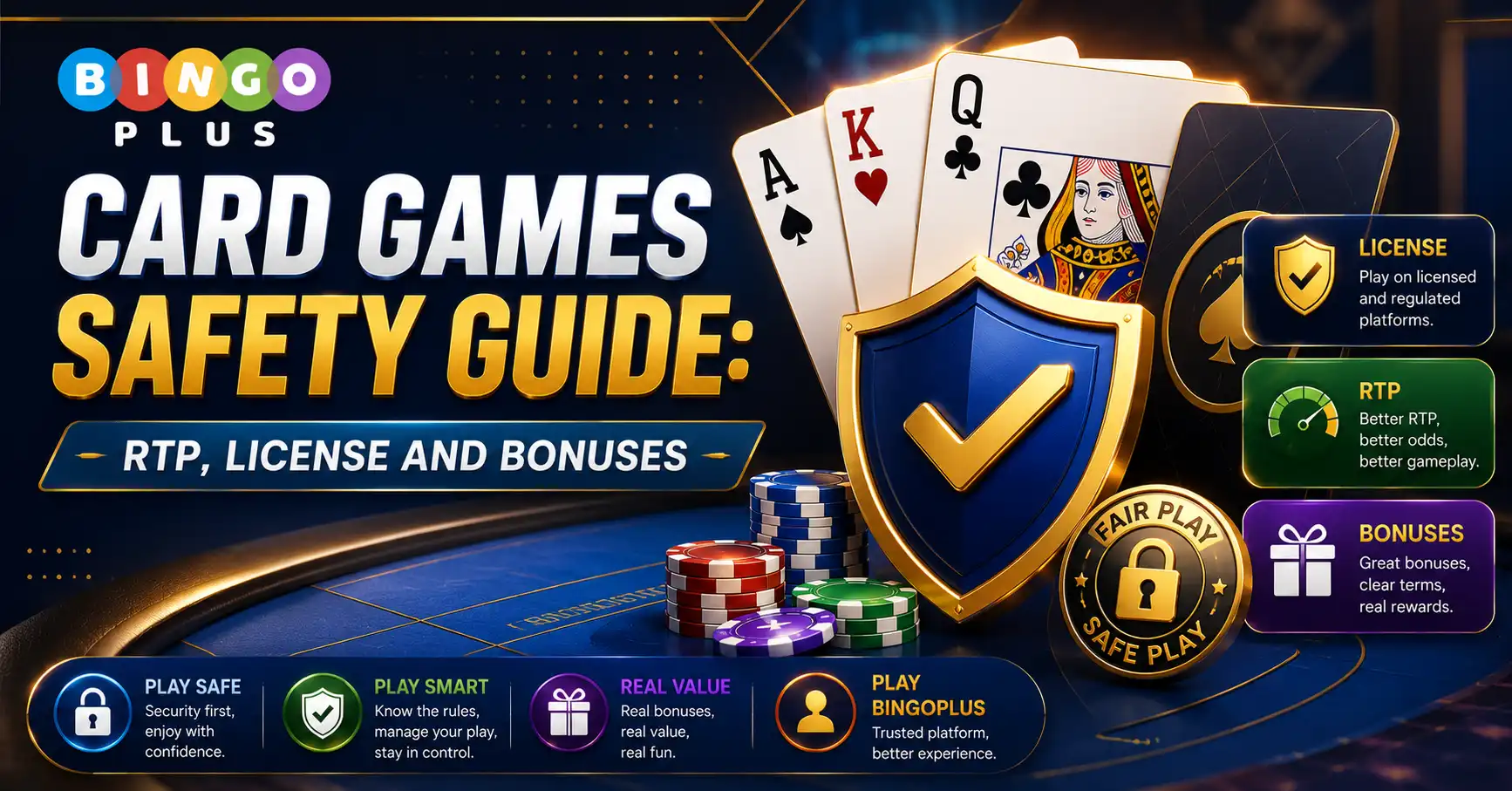
As a senior player and review specialist, I use three gold standards before I trust any card games platform:
- Verified license and official domain: in the Philippines, I check whether the service provider, platform, or domain appears in the official PAGCOR regulatory list.
- Transparent game rules and math: card games should show RTP, house edge, table limits, game rules, provider name, and bet settlement logic.
- Withdrawal safety: KYC, payment channels, withdrawal limits, and bonus rules must be clear before deposit.
- Click to spin for free and win the ultimate prize!
PAGCOR’s public “List of Service Providers and Registered Domains/URLs” is issued by its Electronic Gaming Licensing Department and lists service providers, game offerings, brands or online gaming platforms, and registered domains/URLs as of 18 March 2025.
Bet responsibly, live a wonderful life. Card games involve financial risk, and every player is responsible for their own decisions.
What Are Online Card Games?
Card Games in online gaming cover a wide range of real-money and entertainment formats. Some are played against the house. Some are played against other users. Some use live dealers. Others use digital RNG systems.
Common online card game categories include:
- Live Baccarat
- Live Blackjack
- Casino Hold’em
- Three Card Poker
- Poker tournaments
- Tongits
- Pusoy
- Pusoy Dos
- Dragon Tiger
- Teen Patti-style games
- Digital card mini-games
The risk profile changes by game type.
A blackjack table is not the same as Tongits. Baccarat is not the same as poker. A casino card game against the house has built-in house edge. A peer-to-peer card game may depend more on player skill, table liquidity, rake, and anti-collusion controls.
That is why I never judge a platform only by the number of games. I judge the safety framework behind the games.
Authority License and Safety: Why PAGCOR Verification Matters
For Philippine users, PAGCOR licensing is one of the strongest trust indicators. PAGCOR’s list identifies multiple regulated service providers, approved gaming categories, brand names, and registered domains/URLs.
A legitimate card games platform should make these details easy to verify:
- Legal service provider
- Brand or online gaming platform name
- Registered domain or URL
- Game offering category
- KYC rules
- Payment rules
- Responsible gaming policy
- Customer support route
A platform may look official. It may use polished graphics, a mobile app page, and familiar brand colors. That does not prove safety.
The domain must match the regulatory record.
What a PAGCOR-Registered Domain Helps Confirm
A PAGCOR-registered domain does not mean the player will win. It does not remove game risk.
It helps confirm that the domain is connected to a regulated gaming structure.
That matters for:
- Player identity verification
- Anti-money laundering controls
- Age-gating
- Official access route checks
- Payment monitoring
- Approved gaming categories
- Brand-domain consistency
The PAGCOR list includes AB Leisure Exponent, Inc. as a service provider for Traditional Bingo Games and lists Bingo Plus-related platforms and registered domains, including https://bingoplus.com/, https://bingoplus.ph/, play.bingoplus.com, BingoPlus Poker, GameZone, Arena Plus, PeryaPlus, SpinPlus, SlotPlus, and ChampionZone-related entries.
For card games, this matters because players often search for login pages, app downloads, poker rooms, Tongits tables, or Pusoy platforms. Fake mirrors can intercept that demand.
Comparing License Quality by Region
Not every license has the same value for every player.
For Philippine users, I give the most practical weight to PAGCOR domain verification because it relates directly to local-facing gaming operations.
Other international licenses may appear on offshore platforms:
- Malta Gaming Authority
- UK Gambling Commission
- Curaçao licensing structures
- Gibraltar licensing
- Isle of Man licensing
These may signal regulatory oversight in their own markets. But a foreign license alone does not prove that a platform is properly authorized for Philippine users.
For local players, the best question is simple:
Does the brand and domain match the official Philippine regulatory record?
If not, I do not deposit.
Card Games Red Flags I Avoid
I avoid any platform that shows these signs:
- No visible license details
- No official company name
- No registered domain match
- No clear KYC policy
- No withdrawal limits
- No game provider information
- No table rules
- No rake or commission disclosure
- Hidden bonus terms
- Random APK download links
- “Guaranteed win” marketing
- Support only through private chat groups
- No responsible gaming message
A serious platform explains rules before taking money.
A risky platform makes deposit easy and withdrawal difficult.
Game Math and Rules: RTP, House Edge and Volatility
Card games are often misunderstood because players think cards create control.
Some card games do involve decision-making. But the platform still has mathematical advantages through:
- House edge
- Commission
- Rake
- Paytable design
- Bonus bet pricing
- Table limits
- Rule variants
- Player pool quality
The key terms are:
- RTP: Return to Player, the theoretical long-term return.
- House edge: the platform’s mathematical advantage.
- Volatility: how strongly results swing in short sessions.
- RNG: Random Number Generator used in digital card games.
- Rake: fee taken from player-vs-player card games.
- Commission: fee applied to certain winning bets, common in baccarat.
RTP helps compare games. It does not predict your next hand.
Specific Game Analysis: Baccarat RTP and Volatility
Baccarat is one of the cleanest card games to evaluate. The player has few decisions, and the main bets are easy to compare.
Typical baccarat bets:
- Banker
- Player
- Tie
- Banker Pair
- Player Pair
- Dragon-style side bets
In standard baccarat math, the Banker bet usually has the lowest house edge. The Player bet is slightly weaker. The Tie bet is much riskier despite its attractive payout.
Baccarat Value Table
| Bet Type | Typical Risk Profile | Expert View |
|---|---|---|
| Banker | Lowest main-bet house edge | Best mathematical main bet |
| Player | Slightly higher house edge | Still acceptable |
| Tie | High house edge | Poor long-term value |
| Pair bets | High volatility | Entertainment only |
| Bonus side bets | Very high swing | Avoid as a core strategy |
Baccarat is often low-to-medium volatility if the player sticks to Banker and Player.
It becomes high-risk when the session is built around Tie, Pair, or side bets.
Baccarat Strategy I Actually Use
I do not use pattern charts as prediction tools. Past cards do not force future results.
My baccarat framework is simple:
- Prefer Banker and Player over Tie.
- Keep side bets small or skip them.
- Do not double after every loss.
- Set a fixed session budget.
- Stop after the loss limit is reached.
- Avoid “roadmap” superstition.
- Treat streaks as variance, not signals.
The safest baccarat player is not the one who predicts the shoe. It is the one who controls stake size.
Specific Game Analysis: Blackjack RTP and Decision Quality
Blackjack is different from baccarat because player decisions matter.
A good blackjack table can offer strong theoretical RTP when rules are fair and the player uses basic strategy. But poor decisions quickly reduce value.
Important blackjack rules include:
- Blackjack payout: 3:2 is better than 6:5
- Dealer stands or hits on soft 17
- Number of decks
- Double-down rules
- Split rules
- Surrender option
- Insurance rules
- Side bet availability
Blackjack Volatility
Blackjack usually has medium volatility.
It is less random than many side-bet-heavy games, but the bankroll can still swing fast.
Common mistakes include:
- Taking insurance too often
- Playing side bets as a main strategy
- Ignoring dealer upcard
- Standing on weak totals
- Chasing losses with larger bets
- Playing without a basic strategy chart
Blackjack Strategy Notes
For safer play:
- Learn basic strategy.
- Avoid insurance unless you fully understand the math.
- Choose 3:2 blackjack payout when available.
- Check table minimums before sitting.
- Avoid side bets unless playing for entertainment.
- Keep bet size small relative to bankroll.
Blackjack rewards discipline more than instinct.
Specific Game Analysis: Poker, Tongits and Pusoy
Poker-style and peer-to-peer card games are different because the platform may not win directly from game outcomes. Instead, it may earn from rake, service fees, tournament fees, or table commissions.
This changes the risk model.
What I Check in Peer-to-Peer Card Games
For games like poker, Tongits, or Pusoy, I check:
- Rake percentage
- Table fee
- Tournament fee
- Withdrawal rules
- Anti-collusion controls
- Bot detection
- Matchmaking fairness
- Player pool liquidity
- Hand history availability
- Dispute process
A player can be skilled and still lose value if rake is too high.
Why Rake Matters
Rake is a silent cost.
If a platform takes a high fee from every pot or match, players need a stronger edge just to break even.
A fair card games room should clearly explain:
- How rake is calculated
- Maximum rake cap
- Tournament fee structure
- Promotional deductions
- Refund rules for disconnected games
If rake is hidden, I treat the platform as high risk.
RNG and Live Dealer Card Games
Card games may run in two ways:
- Live dealer format
- RNG digital format
Both can be fair if properly operated.
Live Dealer Card Games
Live dealer games use real cards, real tables, and streamed dealing.
I check:
- Dealer provider
- Game rules
- Table limits
- Round history
- Video stability
- Shoe-shuffle policy
- Settlement speed
- Customer support during disputes
RNG Card Games
RNG card games use digital outcomes.
I check:
- Provider name
- RNG certification claim
- Paytable
- Game history
- Rule page
- RTP disclosure
- Audit information where available
The format matters less than transparency. A live dealer game can still be risky on an unlicensed platform. An RNG game can be fair if properly certified and regulated.
Bonus Mechanism Breakdown: Wagering Requirements
Card game bonuses can be tricky because many promotions do not treat all games equally.
A bonus may say “30x wagering,” but baccarat, blackjack, poker, or Tongits may contribute less than slots.
This is where players get trapped.
What Is a Wagering Requirement?
A Wagering Requirement is the total betting volume required before bonus funds or bonus winnings become withdrawable.
Example:
- Deposit: ₱1,000
- Bonus: ₱1,000
- Total credited balance: ₱2,000
- Wagering requirement: 30x
- Required turnover: ₱2,000 × 30 = ₱60,000
That is not simply a free ₱1,000.
It is a ₱60,000 turnover condition.
Why Card Game Bonuses Are Often Lower Value
Card games with lower house edge are often restricted by platforms.
A bonus may apply like this:
- Slots: 100% contribution
- Live casino: 20% contribution
- Baccarat: 10% contribution
- Blackjack: 5% contribution
- Poker: excluded
- Tongits/Pusoy: separate promo rules
That means a 30x bonus may become much harder to clear through card games.
Example: Real Bonus Value Calculation
Assume:
- Bonus amount: ₱1,000
- Required turnover: ₱30,000
- Game: baccarat
- Baccarat contribution: 20%
- Actual betting volume needed: ₱30,000 ÷ 20% = ₱150,000
Now the bonus looks very different.
If the player is using a low-edge game but the contribution rate is poor, the required time and risk increase sharply.
10x vs 30x Wagering
A 10x wagering requirement can be fair if:
- Card games contribute at a reasonable rate
- Expiry is not too short
- Max bet is realistic
- Withdrawal cap is clear
- KYC rules are stated early
A 30x wagering requirement can be difficult for card games if contribution is low.
I do not judge the number alone. I judge the full bonus structure.
Bonus Terms I Always Read First
Before accepting a card games bonus, I check:
- Wagering multiple
- Eligible games
- Contribution rate
- Max bet per hand
- Bonus expiry
- Withdrawal cap
- Minimum deposit
- KYC requirement
- Duplicate account policy
- Restricted betting patterns
- Cashback calculation
- Rakeback rules
The safest bonus is not the biggest one. It is the clearest one.
KYC, Payments and Withdrawal Safety
For card games, withdrawal safety is especially important because skilled players, tournament players, and promo users may hold larger balances.
A reliable platform should explain:
- Minimum deposit
- Minimum withdrawal
- Daily withdrawal limit
- Monthly withdrawal limit
- Processing time
- KYC requirements
- Supported payment methods
- Failed withdrawal process
- Account name matching rules
- Bonus withdrawal conditions
Why KYC Is a Protection Layer
KYC can feel inconvenient, but in regulated gaming it helps prevent:
- Underage play
- Identity fraud
- Stolen payment accounts
- Duplicate accounts
- Bonus abuse
- Money laundering risk
- Withdrawal disputes
The problem is not KYC. The problem is surprise KYC after a large win.
A trustworthy platform tells players what documents are needed before withdrawal.
Common KYC Documents
Players are often asked for:
- Government-issued ID
- Selfie or liveness check
- Proof of address
- Payment account proof
- Bank or e-wallet ownership confirmation
Use the same legal name across the platform account and payment channel. Name mismatches are one of the fastest ways to delay cashout.
How I Compare Card Games Platforms
I use a structured scoring method.
1. License and Domain Match
I verify:
- Is the operator listed?
- Is the brand listed?
- Is the domain listed?
- Does the URL match exactly?
- Is the game category covered?
For Philippine users, PAGCOR’s list is a practical reference because it includes columns for service provider, game offering, brand or online gaming platform, and registered domains/URLs.
2. Game Rule Transparency
A strong platform should show:
- Rules page
- Table limits
- Bet settlement rules
- RTP or house edge information
- Provider name
- Rake or commission structure
- Dispute procedure
- Round history
If rules are vague, risk increases.
3. Payment Reliability
I check:
- Withdrawal processing time
- E-wallet support
- Bank transfer support
- KYC timing
- Daily limits
- Manual review rules
- Fee policy
- Customer service speed
A platform that makes deposit instant but withdrawal unclear is not balanced.
4. Bonus Fairness
I prefer:
- Lower wagering
- Clear contribution rate
- Fair max bet rule
- No hidden withdrawal cap
- Reasonable expiry period
- Clear cashback rules
- Transparent VIP terms
A small, fair bonus beats a large, confusing bonus.
5. Responsible Gaming Controls
A responsible platform should offer:
- Age restriction
- Deposit limits
- Loss limits
- Cooling-off tools
- Self-exclusion
- Reality checks
- Problem gambling support
- Account closure support
These features matter in YMYL content because player safety is part of platform quality.
Best Card Games by Player Type
Different card games suit different players.
Best for Simple Rules
Choose:
- Baccarat
- Dragon Tiger
- Basic casino card games
These are easier to learn and require fewer decisions.
Best for Strategy
Choose:
- Blackjack
- Poker
- Casino Hold’em
These require better rule knowledge and bankroll discipline.
Best for Filipino Social Play
Choose:
- Tongits
- Pusoy
- Pusoy Dos
These games are familiar to many local users, but platform fairness, rake, and anti-collusion tools matter.
Best for Low House Edge
Choose:
- Banker bet in baccarat
- Good-rule blackjack
- Fair-rake poker tables
Avoid side bets if the goal is value.
Best for Entertainment
Choose:
- Live dealer card games
- Game-show card hybrids
- Casual card rooms
These can be fun, but do not treat them as income tools.
Practical Bankroll Rules for Card Games
I use different bankroll rules depending on the game.
Baccarat
- Use small flat bets.
- Avoid Tie as a main strategy.
- Skip most side bets.
- Stop after a fixed loss.
- Do not chase patterns.
Blackjack
- Use basic strategy.
- Avoid 6:5 blackjack tables when possible.
- Do not rely on insurance.
- Watch table minimums.
- Avoid side bets as a core plan.
Poker, Tongits and Pusoy
- Understand rake.
- Track session results.
- Avoid emotional rematches.
- Do not play too many tables at once.
- Watch for collusion signals.
- Leave tables with suspicious behavior.
A good player protects the bankroll before chasing profit.
Common Mistakes Card Game Players Make
Mistake 1: Trusting a Fake Official Domain
Many fake sites copy brand designs.
Always check the official domain source.
Mistake 2: Ignoring Bonus Contribution Rates
A 30x bonus can become much harder if card games only count 10% or 20%.
Mistake 3: Treating RTP as a Guarantee
RTP is long-term theory. It does not protect one session.
Mistake 4: Overusing Side Bets
Side bets are usually high-volatility and lower value.
They are entertainment, not strategy.
Mistake 5: Playing Without KYC Awareness
If your account name and payment name do not match, withdrawals may be delayed.
Mistake 6: Confusing Skill With Guaranteed Profit
Skill helps in some card games. It does not remove variance, rake, or platform risk.
My Card Games Safety Checklist
Before I register or deposit, I check:
- Is the operator licensed?
- Is the domain registered?
- Does the platform show legal information?
- Are card game rules clear?
- Is RTP or house edge explained?
- Is commission or rake disclosed?
- Are table limits visible?
- Are KYC rules clear?
- Are withdrawal limits visible?
- Are bonus contribution rates listed?
- Are responsible gaming tools available?
- Is support reachable through official channels?
- Are APK or app links from official sources?
If a platform fails the license, domain, or withdrawal checks, I do not play there.
FAQ: Card Games Compliance and Technical Questions
How can I check if a card games platform is legal in the Philippines?
Check whether the service provider, brand, and domain appear in PAGCOR’s official registered domain list. If the domain does not match, avoid depositing.
Does RTP really decide whether I win in card games?
No. RTP and house edge describe long-term mathematical return. They help compare games, but they cannot predict one session.
How do I complete KYC faster before withdrawing?
Use your real legal name, submit a valid ID, match your payment account name, and upload clear documents. Most delays come from blurry files or name mismatches.