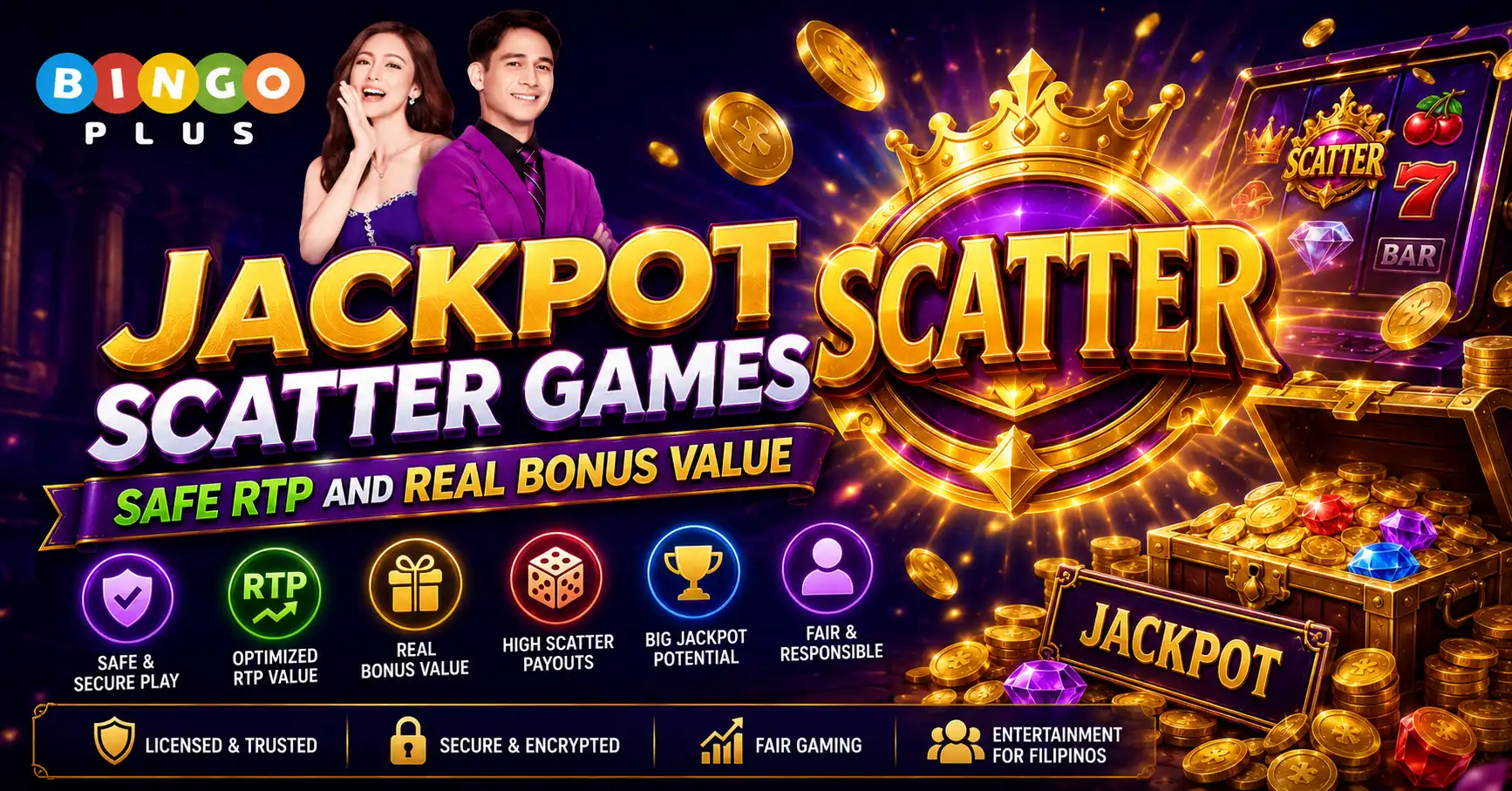





Fruit scatter games appear simple: cherries, lemons, grapes, watermelons, bells, lucky sevens, and oversized scatter symbols spinning across a compact reel grid.
That familiar presentation can hide serious differences in game mathematics. Two nearly identical titles may use different RTP settings, volatility profiles, scatter frequencies, maximum wins, or bonus contributions.
The larger risk appears before the reels even move. Players can lose money through copied domains, unlicensed operators, blocked withdrawals, undisclosed KYC conditions, or bonuses with expensive wagering requirements.

After reviewing gambling platforms and reel games for years, I apply three non-negotiable standards:
- Verify the operator and exact domain through an official regulatory source.
- Confirm the provider, rules, RTP, volatility, and scatter mechanics.
- Read KYC, bonus, payment, and withdrawal conditions before depositing.
Bet responsibly, live a wonderful life. Gambling always involves financial risk, no result is guaranteed, and players remain responsible for using only money they can afford to lose.
What Are Fruit Scatter Games?
Fruit scatter games are digital reel games that combine traditional fruit-machine imagery with a scatter-triggered feature.
Common symbols include:
- Cherries
- Lemons
- Oranges
- Grapes
- Watermelons
- Plums
- Bells
- Bars
- Lucky sevens
- Stars or fruit baskets
The scatter is different from an ordinary paying symbol. Regular symbols normally need to appear on an active payline, cluster, or approved winning way, while scatters may pay or trigger a feature from any eligible reel position.
Typical scatter features include:
- Free spins
- Instant cash awards
- Win multipliers
- Expanding symbols
- Sticky wilds
- Cascading wins
- Collect meters
- Retriggered bonus rounds
- Jackpot or prize-wheel access
A fruit theme does not define the mathematical quality of a game. The real evaluation starts with its paytable, reel model, RTP, hit frequency, volatility, and feature allocation.
PAGCOR Licensing and Protection Against Fake Domains
For Philippine players, the primary regulatory reference is the Philippine Amusement and Gaming Corporation, or PAGCOR.
PAGCOR states that it regulates games of chance and licenses gaming operations within Philippine territory through its Electronic Gaming Licensing Department.
PAGCOR is an authoritative Philippine benchmark, but it is not a universal regulator for every Asian country. Players outside the Philippines must also check the laws and competent regulator in their own location.
Check the Current PAGCOR Registered-Domain List
A logo or copied licence number displayed on a platform is not enough. Fraudulent websites can reproduce branding, support panels, deposit pages, and game-lobby artwork.
Players should compare the operator and exact website address against PAGCOR’s current official records:
- PAGCOR-accredited gaming system administrators, brands and registered domains
- PAGCOR-approved brands and domains of licensed casinos
- PAGCOR official website
The current documents reviewed for this article were dated July 16, 2026. Since registrations can change, players should open the live PAGCOR documents instead of trusting an old screenshot or third-party copy.
My Domain Verification Process
I use the following process before entering personal or financial information:
- Type pagcor.ph directly into the browser.
- Open the current registered-brand and domain document.
- Search for the operator or brand name.
- Compare the complete domain character by character.
- Check whether the current page uses the listed main domain or an approved URL.
- Confirm that the connection uses HTTPS.
- Avoid misspellings, added hyphens, strange prefixes, and shortened links.
- Repeat the check before downloading an APK or making a payment.
Cross-checking the official list greatly reduces phishing exposure, but it cannot provide a literal 100% guarantee. Malware, fake support accounts, compromised devices, deceptive advertisements, and social-engineering messages remain separate threats.
What PAGCOR Status Does and Does Not Prove
Regulatory status provides a stronger accountability framework than an anonymous offshore page. It can establish requirements around approved operations, registered domains, technical controls, reporting, and player protection.
It does not guarantee:
- That a player will win
- That every game has a high RTP
- That every promotion offers positive value
- That KYC will be immediate
- That all withdrawals will arrive instantly
- That a licensed operator’s logo cannot be copied
I therefore evaluate the operator and game separately. A regulated platform may still offer highly volatile games with a significant house edge.
How Fruit Scatter Games Work Mathematically
The outcome of a legitimate digital game is normally selected through a random number generator, or RNG, and translated into visible reel positions according to the game’s internal reel mapping and paytable.
The animation does not determine the result. It displays a result already selected by the game system.
Scatter Probability
Suppose a simplified five-reel game gives each reel an independent 8% probability of displaying at least one qualifying scatter.
The probability of obtaining at least three scatters would be:P(X≥3)=k=3∑5(k5)pk(1−p)5−k
Using p=0.08:P(X≥3)≈0.00453
That equals approximately:0.453%≈1 trigger per 221 rounds
This is only an illustration. Real games may use weighted virtual reels, multiple scatter positions, dependent feature logic, or different probabilities for each reel.
Players cannot reliably calculate the true trigger rate from visible symbols alone. The provider must publish the relevant information or have it confirmed through technical testing.
Averages Do Not Create a Schedule
If a feature has a theoretical frequency of one in 221 rounds, it does not mean the feature must appear by round 221.
Random results can produce:
- Two triggers within ten rounds
- No trigger across several hundred rounds
- Several small free-spin awards
- One rare high-value feature
- Long sequences of non-winning rounds
A theoretical frequency is a long-run average, not an appointment. Increasing the stake does not make the scatter “due.”
RTP and House Edge
Return to player, or RTP, estimates the percentage of total stakes returned by a game across an extensive mathematical cycle.
The basic formula is:RTP=Total amount wageredTheoretical amount returned×100
A game with 96% RTP has a theoretical house edge of:100%−96%=4%
If a player generates ₱20,000 in total wagers, the modelled loss is:₱20,000×0.04=₱800
This does not predict that a particular player will lose exactly ₱800. Short-term results can sit far above or below the theoretical figure because of variance.
Compare the Correct RTP Configuration
Some providers offer operators several approved RTP configurations for the same game. One platform may run a title at 96%, while another uses a lower version.
My team checks the RTP inside the game’s current information panel rather than relying solely on:
- Review websites
- Promotional banners
- Search snippets
- Old screenshots
- RTP values from another platform
- Figures applying only to demo mode
If the information panel does not disclose RTP, the player cannot make a properly informed mathematical comparison.
Feature RTP Matters
A large share of a fruit game’s return may be concentrated inside its scatter feature.
Consider this hypothetical allocation:
- Total RTP: 96.00%
- Base-game RTP: 70.00%
- Scatter-feature contribution: 26.00%
A player who does not activate the feature during a short session may experience a return far below 96%. The headline percentage remains a long-run model, but a substantial part of it is locked behind an infrequent event.
Where available, compare:
- Total RTP
- Base-game contribution
- Free-spin contribution
- Jackpot contribution
- Feature-buy RTP
- Maximum-win probability
Volatility, Hit Frequency, and Maximum Exposure
RTP cannot describe how a game distributes its returns. That requires volatility, hit frequency, and information about the maximum possible outcome.
Volatility
Volatility measures the expected size and variation of outcomes.
- Low volatility: Smaller awards tend to occur more regularly.
- Medium volatility: Results combine routine returns with occasional larger features.
- High volatility: Long losing sequences may be interrupted by rare large awards.
Two games with identical 96% RTP can produce very different session experiences. A high-volatility title demands a smaller stake relative to the session budget.
Hit Frequency
Hit frequency measures how often a round produces a defined winning event. It does not show how often the player makes a net profit.
For example:
- Stake: ₱10
- Returned amount: ₱4
- Recorded result: A winning hit
- Net financial result: ₱6 loss
Players should distinguish between:
- Symbol-hit frequency
- Any-win frequency
- Stake-recovery frequency
- Scatter-trigger frequency
- Profitable-round frequency
- Maximum-win probability
A high hit rate can be created by frequent returns smaller than the original stake.
RNG Fairness and Independent Testing
A technically fair game should produce results according to its approved mathematical design without changing probabilities because a particular player recently won or lost.
For independent rounds:P(next result∣previous results)=P(next result)
Ten losing rounds do not make a free-spin trigger more likely on the eleventh round. Believing that a trigger must arrive after a losing sequence is the gambler’s fallacy.
My Technical Fairness Checklist
Before playing fruit scatter games on BingoPlus or another platform, I look for:
- An identifiable game provider
- Published game rules
- An accessible paytable
- Current RTP information
- Clear scatter-trigger conditions
- Volatility information
- Game-version details
- RNG testing or certification where disclosed
- Identical core rules across demo and real-value modes
- No claims of guaranteed winning patterns
A laboratory badge has limited value when the testing organisation, game version, certification scope, and verification method cannot be identified.
No Betting System Can Change RTP
Changing stake sizes does not alter the game’s programmed return.
Systems based on doubling after a loss, following symbol patterns, or raising stakes after a dry period only change the speed and scale of financial exposure.
Bankroll control can limit damage. It cannot remove the house edge.
A Practical Bankroll Framework
I treat the bankroll as an entertainment expense, never as investment capital.
The simplest session calculation is:Planned rounds=Stake per roundSession budget
With a ₱1,000 budget and ₱10 stake:₱1,000÷₱10=100 planned rounds
Wins may extend the session, while a preset stop-loss may shorten it.
My working rules are:
- Set the budget before opening the game.
- Keep the stake small relative to the budget.
- Use a separate time limit.
- Never borrow to continue playing.
- Never increase stakes to recover a loss.
- Do not treat recent results as predictions.
- Stop when either the money or time limit is reached.
- Withdraw according to the original plan rather than chasing a larger target.
A larger bankroll does not create better odds. It only allows more exposure to the same mathematical model.
The Real Cost of Bonus Wagering Requirements
Promotions should be evaluated as contracts, not free money.
A bonus may carry:
- Deposit requirements
- 10x, 20x, or 30x wagering
- Deposit-plus-bonus turnover
- Game contribution rates
- Maximum stakes
- Expiry periods
- Maximum conversion limits
- Withdrawal caps
- Restricted payment methods
- KYC deadlines
Missing one condition can invalidate the bonus or its associated winnings.
Bonus-Only Versus Deposit-Plus-Bonus Turnover
Assume a player deposits ₱1,000 and receives a ₱1,000 bonus.
For a 10x bonus-only requirement:₱1,000×10=₱10,000
For a 10x deposit-plus-bonus requirement:(₱1,000+₱1,000)×10=₱20,000
The same “10x” headline can therefore represent two very different levels of exposure.
At 30x deposit plus bonus:(₱1,000+₱1,000)×30=₱60,000
That is six times the turnover of a 10x bonus-only structure.
Estimate the Mathematical Cost
A basic expected-turnover-cost estimate is:Expected cost=Required eligible wagering×House edge
If the game has 96% RTP, its theoretical house edge is 4%.
For ₱20,000 in required wagering:₱20,000×0.04=₱800
A simplified bonus-value proxy is:Bonus value proxy=Bonus amount−Expected turnover cost
Therefore:₱1,000−₱800=₱200
The ₱200 figure is not guaranteed profit. Volatility, account depletion, contribution rules, withdrawal caps, maximum stakes, and excluded games may reduce the practical value.
Game Contribution Can Ruin the Offer
Suppose fruit scatter games contribute only 20% toward a ₱20,000 wagering target.
The actual amount that must be played becomes:₱20,000÷0.20=₱100,000
At a 4% house edge:₱100,000×0.04=₱4,000
A ₱1,000 bonus tied to an expected turnover cost of ₱4,000 has poor theoretical value.
My Pre-Deposit Bonus Checklist
Before activating a BingoPlus or other platform promotion, I record:
- Required deposit
- Advertised bonus
- Rollover multiplier
- Turnover calculation base
- Eligible fruit scatter
- Game contribution percentage
- Permitted stake range
- Maximum stake while wagering
- Promotion expiry
- Maximum convertible balance
- Maximum withdrawal
- KYC deadline
- Restricted payment methods
- Bonus-cancellation conditions
I reject any offer whose important conditions remain hidden until after activation.
KYC Verification and Withdrawal Limits
KYC verification confirms identity, age, account ownership, and payment-source consistency.
Depending on the operator and transaction, a player may need to provide:
- Government-issued identification
- A current selfie or facial check
- Mobile-number verification
- Address information
- Proof of payment-account ownership
- Additional source-of-funds information
Complete KYC before depending on a stated withdrawal time. A request may be delayed when:
- The player and wallet names do not match.
- Identification is expired or unreadable.
- Multiple accounts appear connected.
- Bonus turnover is incomplete.
- The request exceeds a withdrawal limit.
- Account activity triggers a security review.
- The selected payment method is under maintenance.
Never send identification, passwords, wallet PINs, or one-time codes to unofficial social-media accounts.
Review Withdrawal Terms Before Depositing
A transparent platform should disclose:
- Minimum withdrawal
- Maximum daily or monthly withdrawal
- Processing estimates
- Supported payment methods
- Account-name requirements
- KYC conditions
- Bonus-related restrictions
- Possible manual reviews
- Complaint and escalation channels
“Instant withdrawal” should not be interpreted as unconditional. Verification status, payment networks, transaction limits, maintenance, and security checks can affect processing.
How I Compare Fruit Scatter Games on BingoPlus
When reviewing fruit scatter games on BingoPlus, I separate platform trust from game value.
Platform-Level Checks
- PAGCOR record and exact registered domain
- Legal operator identity
- Secure account access
- KYC process
- Deposit and withdrawal conditions
- Published withdrawal limits
- Verified customer-support channels
- Responsible-gambling controls
Game-Level Checks
- Provider identity
- Current RTP configuration
- House edge
- Volatility
- Scatter-trigger rules
- Free-spin retriggers
- Wild and multiplier behaviour
- Feature contribution to RTP
- Maximum win
- Bonus wagering contribution
A registered platform does not automatically make every game mathematically attractive. Likewise, an advertised high-RTP title is unsafe if it appears on a copied or unregistered domain.
Frequently Asked Questions
Do I need KYC before withdrawing from fruit scatter games?
Usually, yes. A regulated operator may require identity, age, and payment-ownership verification before approving a withdrawal.
Complete KYC early, use payment accounts in your own name, and submit documents only through a verified platform channel.
Are fruit scatter games technically fair?
They can be technically fair when the provider is identifiable, the game uses an approved RNG model, and its implementation is properly tested and regulated.
Fairness does not mean the player has an advantage. A fair game can still have a house edge, high volatility, and long losing sequences.
How long does a withdrawal take?
There is no universal processing period. Timing depends on KYC status, payment method, withdrawal limits, bonus completion, security reviews, weekends, and payment-network maintenance.
Check the published processing window before depositing and retain the transaction reference if support is needed.