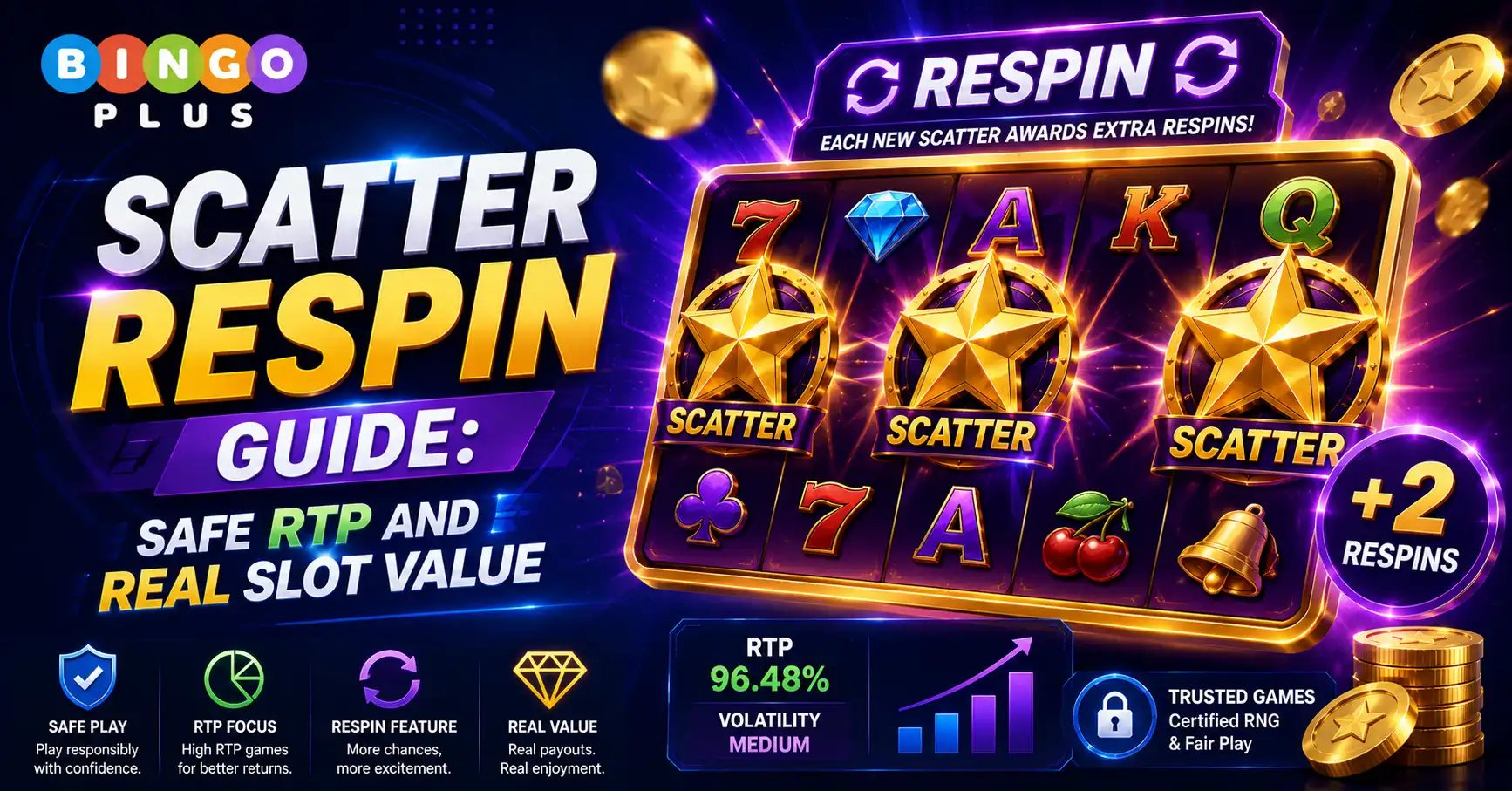



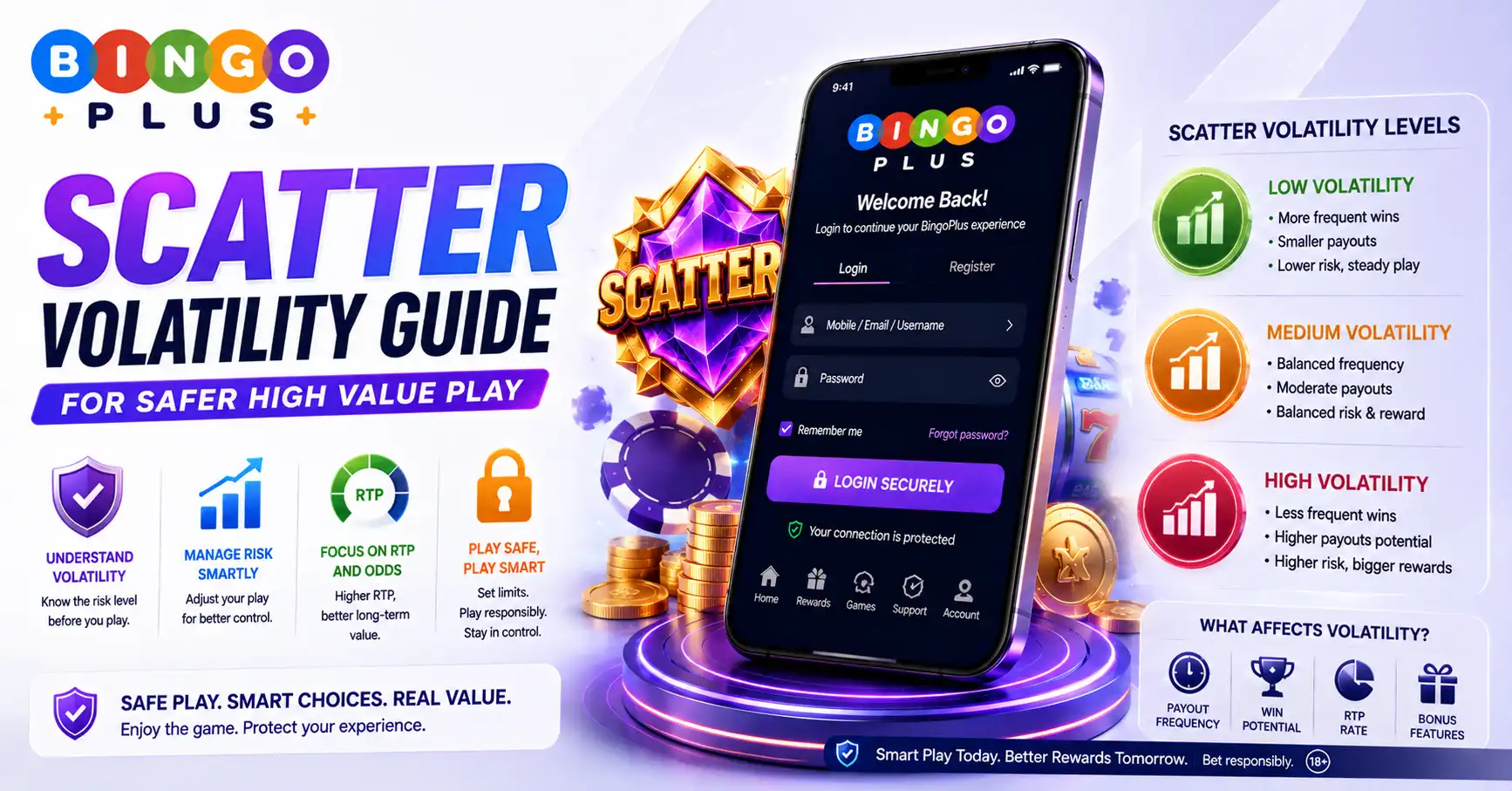
A scatter game can advertise a competitive RTP and still drain a small bankroll rapidly. The reason is scatter volatility: two games may return the same theoretical percentage while distributing that return through completely different combinations of small wins, bonus triggers, multipliers, and rare jackpots.
That mathematical uncertainty becomes more dangerous on an unverified platform. Players may face copied licences, manipulated download files, unclear withdrawal rules, or a bonus balance locked behind unrealistic wagering conditions.

Before I deposit, I require three non-negotiable standards:
- The operator, brand, and exact domain must appear in an official regulatory record.
- The game must disclose its RTP, volatility, paytable, trigger rules, and maximum win.
- The platform must publish its KYC verification, wagering requirements, and withdrawal limits.
- Click to spin for free and win the ultimate prize!
A winning streak is not evidence of fairness, and a losing streak does not automatically prove manipulation. The correct assessment begins with regulation and then moves into mathematics.
Bet responsibly, live a wonderful life. Gambling carries financial risk, results are uncertain, and every player remains responsible for personal spending decisions.
What Is Scatter Volatility?
Scatter volatility describes the degree to which scatter-related outcomes contribute to short-term balance swings. It reflects how often scatters appear, what they activate, and how much value is concentrated inside rare features.
A low-volatility scatter game may produce frequent small feature wins. A high-volatility title may trigger less often but place more theoretical value inside multipliers, jackpots, retriggers, or unusually large bonus rounds.
Core Entities Behind Scatter Volatility
When our team reviews a scatter game, we examine these connected entities:
- Scatter symbol
- Weighted reel strip
- Random Number Generator
- Hit frequency
- Trigger probability
- Return to Player
- Variance and standard deviation
- Maximum win
- Bonus-round distribution
- Progressive jackpot contribution
These terms measure different aspects of the game. A high advertised maximum win says nothing about how often that outcome occurs.
Volatility Is Not the Same as RTP
RTP measures theoretical long-run return. Volatility measures how unevenly that return is distributed.
Two games can both have 96% RTP:
- Game A pays many small and medium wins.
- Game B produces long dry periods interrupted by rare large wins.
- Both retain a theoretical 4% house edge.
- Game B creates greater short-term bankroll risk.
The relationship is:House Edge=1−RTP
For a 96% RTP game:1−0.96=0.04
The theoretical house edge is therefore 4%, regardless of whether volatility is low, medium, or high.
Verify Legality Before Studying the Mathematics
Game mathematics matters only after the platform itself has passed a regulatory check. A perfectly explained scatter feature is irrelevant if the website is an imitation designed to collect credentials or deposits.
For Philippine-facing platforms, the Philippine Amusement and Gaming Corporation, or PAGCOR, is the official national regulatory authority. PAGCOR states that it regulates games of chance and licenses gaming operations within Philippine territory through its licensing divisions. PAGCOR Electronic Gaming Licensing Department
Check the Official PAGCOR Domain List
PAGCOR publishes a list of accredited Gaming System Administrators, registered brands, and approved domain names. The current document is dated June 30, 2026 and includes BingoPlus-related brand and domain records. Official PAGCOR registered brands and domains PDF
My verification procedure takes less than two minutes:
- Open the document directly from pagcor.ph.
- Search for the platform or operator name.
- Locate the approved domains in the same record.
- Compare the full address character by character.
- Check the hostname again before entering a password.
- Repeat the process before installing an app from a new URL.
The current official list includes BingoPlus-related domains such as bingoplus.com and bingoplus.ph, along with approved subdomains and associated URLs. Since regulatory records may change, players should always use the newest PAGCOR publication.
Why a Licence Logo Is Insufficient
A copied PAGCOR logo proves nothing by itself. Fraudulent sites can reproduce logos, interface elements, payment icons, and even customer-support language.
Common phishing patterns include:
- One substituted letter in the domain.
- Extra words such as “VIP,” “official,” or “secure.”
- A misleading subdomain before an unrelated main domain.
- Shortened links delivered through private messages.
- Unofficial APK downloads.
- Requests for one-time passwords through chat.
- Deposit instructions involving unexplained personal accounts.
Matching the exact domain against the PAGCOR list greatly reduces phishing exposure. It cannot guarantee 100% protection, because compromised devices, browsers, email accounts, or network connections can still redirect a user.
What Regulation Adds
Regulatory status provides a framework for accountability, approved operations, player safeguards, and responsible-gaming controls. It does not guarantee that a player will win or that a high-volatility session will be profitable.
PAGCOR says licensed operators are expected to support responsible-gaming measures intended to reduce harm and prevent underage gambling. These measures include tools such as betting limits and self-exclusion. PAGCOR Responsible Gaming
The Mathematics Behind Scatter Volatility
Visual effects are poor mathematical evidence. To understand volatility, I focus on the probability of each outcome and the size of its associated return.
Suppose a game produces possible returns x1,x2,…,xn, each with probability pi. Its expected return per bet is:μ=i=1∑npixi
The variance is:σ2=i=1∑npi(xi−μ)2
The standard deviation is:σ=σ2
A larger variance means outcomes are more widely spread around the average. That usually translates into sharper balance swings.
A Simple Volatility Comparison
Consider two hypothetical games with the same 96% theoretical return.
Game A distributes more RTP through:
- Frequent small line wins.
- Regular two-scatter payments.
- Modest bonus multipliers.
- Lower maximum prizes.
Game B distributes more RTP through:
- Rare three-scatter triggers.
- Retriggered free spins.
- Large progressive multipliers.
- A very high maximum win.
Game B can still return 96% over its full mathematical cycle, but an individual player is less likely to experience anything close to that percentage during a short session.
Hit Frequency Does Not Measure Profitability
Hit frequency is the percentage of spins producing any qualifying win. It does not show whether those wins exceed the wager.
A game might have a 30% hit frequency, yet many results could return only 0.2x or 0.5x the stake. Those outcomes slow the decline but do not create a net profit.
For example:
- Bet: ₱10
- Winning return: ₱4
- Net result: −₱6
The interface may celebrate a “win,” while the player’s balance still falls.
Scatter Frequency Is a Separate Metric
A scatter can appear without triggering a feature. Players should separate:
- Scatter appearance frequency
- Qualifying scatter frequency
- Feature-trigger frequency
- Retrigger frequency
- Profitable feature frequency
A title may show one or two scatters regularly to create anticipation while requiring three, four, or five symbols for meaningful awards.
Weighted Reels and Trigger Probability
Digital games commonly use weighted virtual reels. Some symbols occupy more virtual stops than others, and the scatter probability may differ by reel.
If reel j has Nj virtual stops and Sj qualifying scatter positions, its simplified scatter probability is:pj=NjSj
Players cannot calculate the true value by counting visible symbols. The complete reel weighting is normally hidden inside the certified mathematical model.
Equal-Reel Trigger Example
Assume a five-reel game has an independent 3% scatter probability on each reel. The probability of landing at least three scatters is:P(X≥3)=i=3∑5(i5)(0.03)i(0.97)5−i
The result is approximately:P(X≥3)=0.000258
That is about 0.0258%, or one trigger per 3,876 spins on average.
This does not mean the scatter must appear once every 3,876 spins. A player could see two triggers close together or no trigger during a much longer sequence.
Unequal Reel Probabilities
Real games may assign different scatter weights to each reel. If the individual probabilities are p1,p2,p3,p4,p5, the formula must calculate all qualifying combinations rather than use a simple binomial model.
The probability of exactly three qualifying reels becomes:P(X=3)=∣A∣=3∑(i∈A∏pi)j∈/A∏(1−pj)
This difference explains why two games with similar-looking reels can have very different trigger rates.
How Scatters Increase Volatility
Scatter features increase variance when a large part of the game’s RTP is placed inside rare bonus outcomes. The effect becomes stronger when the bonus contains additional random layers.
High-volatility mechanics include:
- Expanding multipliers.
- Multiplier accumulation.
- Progressive jackpots.
- Random prize wheels.
- Scatter retriggers.
- Expanding symbols.
- Cascading wins.
- Buy-bonus features.
- Maximum-win caps above 10,000x.
Each extra layer can widen the range between an unprofitable bonus and an exceptional result.
Triggering a Bonus Does Not Guarantee Value
Assume a feature costs nothing beyond the triggering spins and produces these hypothetical results:
- 60% chance of returning 10x
- 25% chance of returning 30x
- 10% chance of returning 80x
- 4.9% chance of returning 200x
- 0.1% chance of returning 5,000x
The expected feature return is:EV=(0.60×10)+(0.25×30)+(0.10×80)+(0.049×200)+(0.001×5000) EV=36.3x
Most players will receive 10x or 30x, even though the mathematical average is pulled upward by rare outcomes. That is a classic high-variance distribution.
RTP Distribution and Real Session Risk
A headline RTP does not reveal how much return sits inside the base game, scatter feature, or jackpot. I prefer games that publish enough information to distinguish these components.
A hypothetical 96% RTP could be distributed as:
- 70% through base-game wins.
- 18% through scatter bonuses.
- 5% through free-spin retriggers.
- 3% through rare jackpot awards.
A player who never hits the rarest outcomes is effectively competing for a smaller portion of the full theoretical model during that session.
Why Short Sessions Deviate From RTP
RTP is designed for long-run analysis, often across millions or billions of simulated rounds. It is not a prediction for 50, 500, or even 10,000 personal spins.
Short-term results depend heavily on:
- Outcome variance.
- Bet size.
- Session length.
- Feature frequency.
- Jackpot contribution.
- Maximum-win probability.
- Available bankroll.
The higher the volatility, the wider the possible deviation from theoretical RTP.
Can a Player Lower the House Edge?
No staking system can change a fixed game’s underlying RNG probabilities. Increasing a bet after a loss, waiting for a “due” scatter, or switching spin speed does not lower the house edge.
Players can only make better product and exposure decisions:
- Select the higher RTP version when several versions exist.
- Avoid games that hide rules or volatility.
- Reject promotions with negative mathematical value.
- Use smaller stakes on high-variance games.
- Confirm jackpot eligibility at the selected bet.
- Stop at a predetermined loss limit.
- Never chase missing scatter symbols.
Choosing a 96.5% RTP game instead of a 94% version lowers the theoretical house edge from 6% to 3.5%. That is a real mathematical improvement, though it does not guarantee a winning session.
Bankroll Planning for Scatter Volatility
The most practical response to volatility is controlling bet size. A bankroll measured in only 20 or 30 bets can disappear quickly without any unusual event occurring.
I normally express bankroll as the number of available betting units:Betting Units=Bet SizeBankroll
For a ₱2,000 bankroll:
- ₱100 spins provide 20 units.
- ₱50 spins provide 40 units.
- ₱20 spins provide 100 units.
- ₱10 spins provide 200 units.
- ₱5 spins provide 400 units.
More units improve session survival but do not change RTP. They simply reduce the percentage of the bankroll exposed on each spin.
My High-Volatility Session Rules
When testing a high-volatility scatter game, I apply these limits:
- Risk no more than 0.5% to 1% of the session bankroll per spin.
- Define the maximum session loss before playing.
- Do not redeposit during the same session.
- Never increase stakes because two scatters appeared.
- Treat bonus purchases as separate high-risk transactions.
- Stop after reaching the time or loss limit.
- Withdraw according to the original plan rather than chasing a larger target.
Near-miss animations do not indicate that a trigger is becoming more likely. Each result follows the game’s defined random model.
Comparing Scatter Volatility on BingoPlus
When comparing games available through BingoPlus, I start with technical information rather than artwork or jackpot size.
My review checklist covers:
- RTP percentage
- Volatility rating
- Hit frequency, if disclosed
- Scatter trigger threshold
- Minimum eligible bet
- Maximum win
- Free-spin retriggers
- Progressive or fixed jackpots
- Bonus purchase cost
- Maximum bonus win
- Game-provider certification
- Applicable promotional contribution
A “high volatility” label is useful, but it is still broad. Two high-volatility games may have very different trigger frequencies and loss-sequence patterns.
Low, Medium, and High Volatility Profiles
Low volatility generally suits players who prefer:
- More frequent small outcomes.
- Lower balance swings.
- Longer sessions at the same stake.
- Less dependence on rare scatters.
Medium volatility may offer:
- A mix of base-game wins and feature value.
- Moderate dry periods.
- Larger but less frequent multipliers.
- A balanced entertainment profile.
High volatility usually involves:
- Long losing sequences.
- Rare feature triggers.
- Wider bonus-result ranges.
- Greater jackpot or maximum-win exposure.
- A higher chance of exhausting a limited bankroll.
No category is automatically “best.” The suitable choice depends on budget, session length, and tolerance for losing sequences.
Bonus Wagering Can Magnify Volatility
A bonus may appear profitable until wagering requirements force a player to generate large turnover on a high-variance game. The risk is not only the theoretical house edge; it is also the possibility of losing the balance before completing rollover.
Calculating 10x Rollover
Suppose a player deposits ₱1,000 and receives a ₱500 bonus with a 10x bonus-only requirement:Required Turnover=₱500×10=₱5,000
If eligible games have 96% RTP, the simplified theoretical loss is:₱5,000×(1−0.96)=₱200
The simplified mathematical bonus value is:₱500−₱200=₱300
This estimate excludes variance, maximum cashout, contribution rates, and the risk of losing the balance early.
Calculating 30x Rollover
If the same offer applies 30x to deposit plus bonus:Required Turnover=(₱1,000+₱500)×30 Required Turnover=₱45,000
At 96% RTP:₱45,000×0.04=₱1,800
The simplified value becomes:₱500−₱1,800=−₱1,300
That offer has negative theoretical value before considering additional restrictions.
Game Contribution Changes the Calculation
If scatter games contribute only 20% toward a ₱5,000 wagering requirement:Actual Play Required=0.20₱5,000=₱25,000
At 96% RTP, the simplified theoretical loss becomes:₱25,000×0.04=₱1,000
A ₱500 bonus would then have a simplified expected value of −₱500.
Why Volatility Makes Bonus EV Less Reliable
The expected-loss formula uses long-run averages. A high-volatility player can lose the entire deposit and bonus before reaching the calculated turnover.
Before accepting a promotion, inspect:
- Whether rollover applies to bonus only or deposit plus bonus.
- Eligible-game contribution rates.
- Maximum bet during wagering.
- Maximum promotional cashout.
- Excluded scatter or jackpot games.
- Bonus expiry.
- Restricted payment channels.
- Whether a jackpot win can be withdrawn during active wagering.
I reject offers when any of these conditions are unclear.
KYC Verification and Withdrawal Protection
KYC verification confirms identity, age, account ownership, and payment-source consistency. It also helps operators meet anti-money-laundering obligations and prevent duplicate accounts.
Common requirements include:
- Government-issued identification.
- Facial verification.
- Registered mobile-number confirmation.
- Proof of address.
- Payment-method ownership.
- Source-of-funds information for larger transactions.
Complete KYC before making a large deposit where possible. A mismatch between the account name and payment method can delay a legitimate withdrawal.
Review Withdrawal Limits First
Players often inspect deposit options but ignore cashout conditions. I reverse that order.
Check:
- Minimum withdrawal.
- Daily and monthly limits.
- Processing periods.
- KYC review times.
- Payment-channel restrictions.
- Jackpot payment procedures.
- Maximum promotional cashout.
- Pending-withdrawal cancellation rules.
- Reasons an account review may be extended.
Take screenshots of the applicable rules before accepting a bonus. If terms change later, those records may help during a formal dispute.
Final Expert Assessment
Scatter volatility determines how aggressively a game distributes wins and losses around its theoretical average. High RTP cannot remove short-term risk when a large part of the return is concentrated in rare scatter features.
Start with the latest PAGCOR domain list, then evaluate RTP, variance, trigger conditions, bonus mathematics, KYC requirements, and withdrawal limits. A regulator can provide an accountability framework, but it cannot turn a random game into guaranteed income.
Use a small stake relative to the bankroll, ignore near-miss psychology, and reject promotions with weak mathematical value. The safest high-value decision is sometimes not to place the next wager.
Frequently Asked Questions
Does KYC verification affect scatter game withdrawals?
Yes, KYC may be required before a withdrawal is approved. The operator may verify identity, age, payment ownership, and account compliance according to its published terms.
Does high scatter volatility mean the game is unfair?
No, high volatility describes wider result swings, not unfairness. Fairness depends on the approved RNG model, accurate rules, technical testing, and operation through a verifiable regulated platform.
How long does a BingoPlus withdrawal take?
Timing depends on KYC status, payment method, account review, and applicable withdrawal limits. Check the current cashier terms and contact official support if processing exceeds the published timeframe.