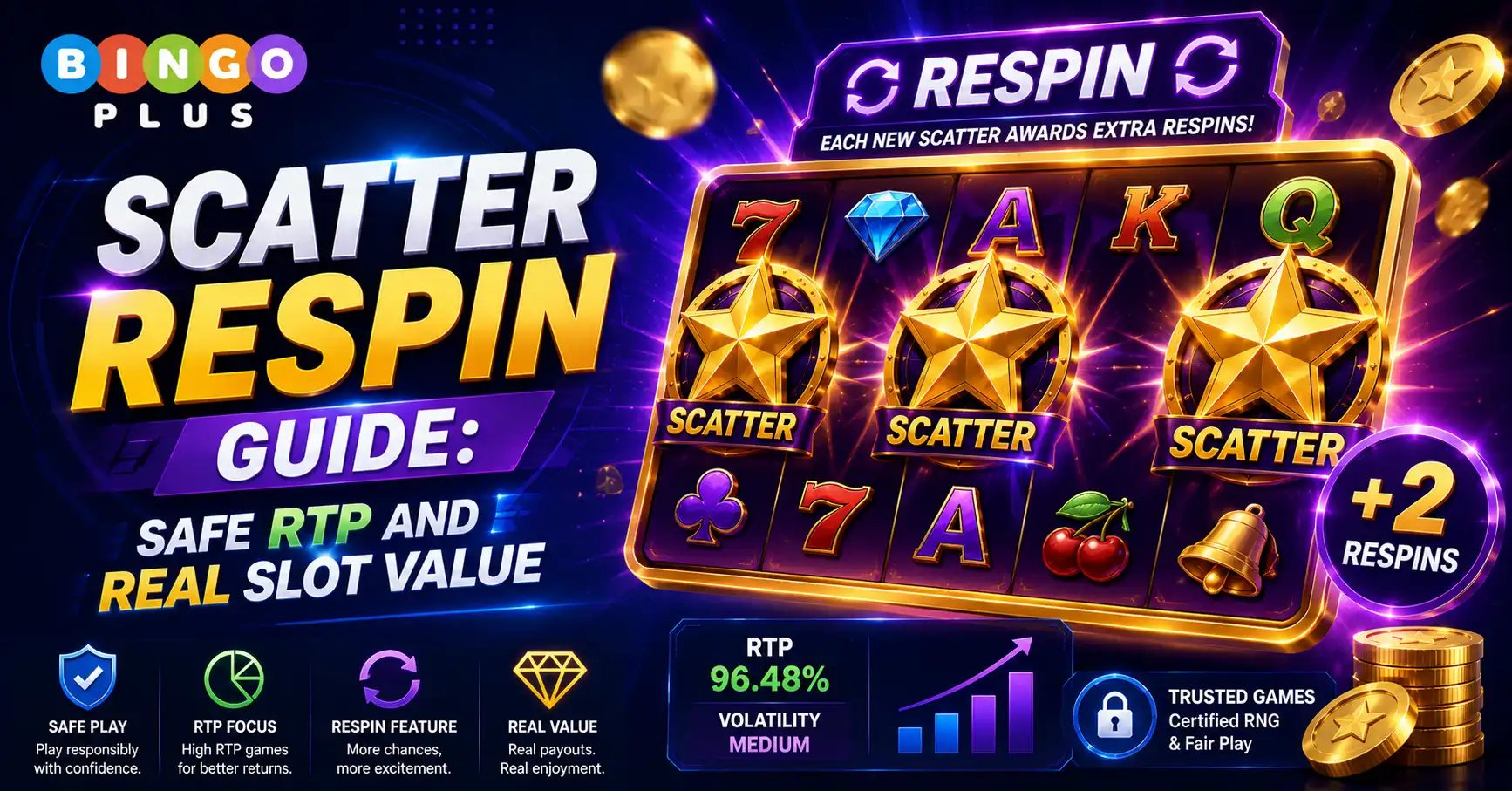



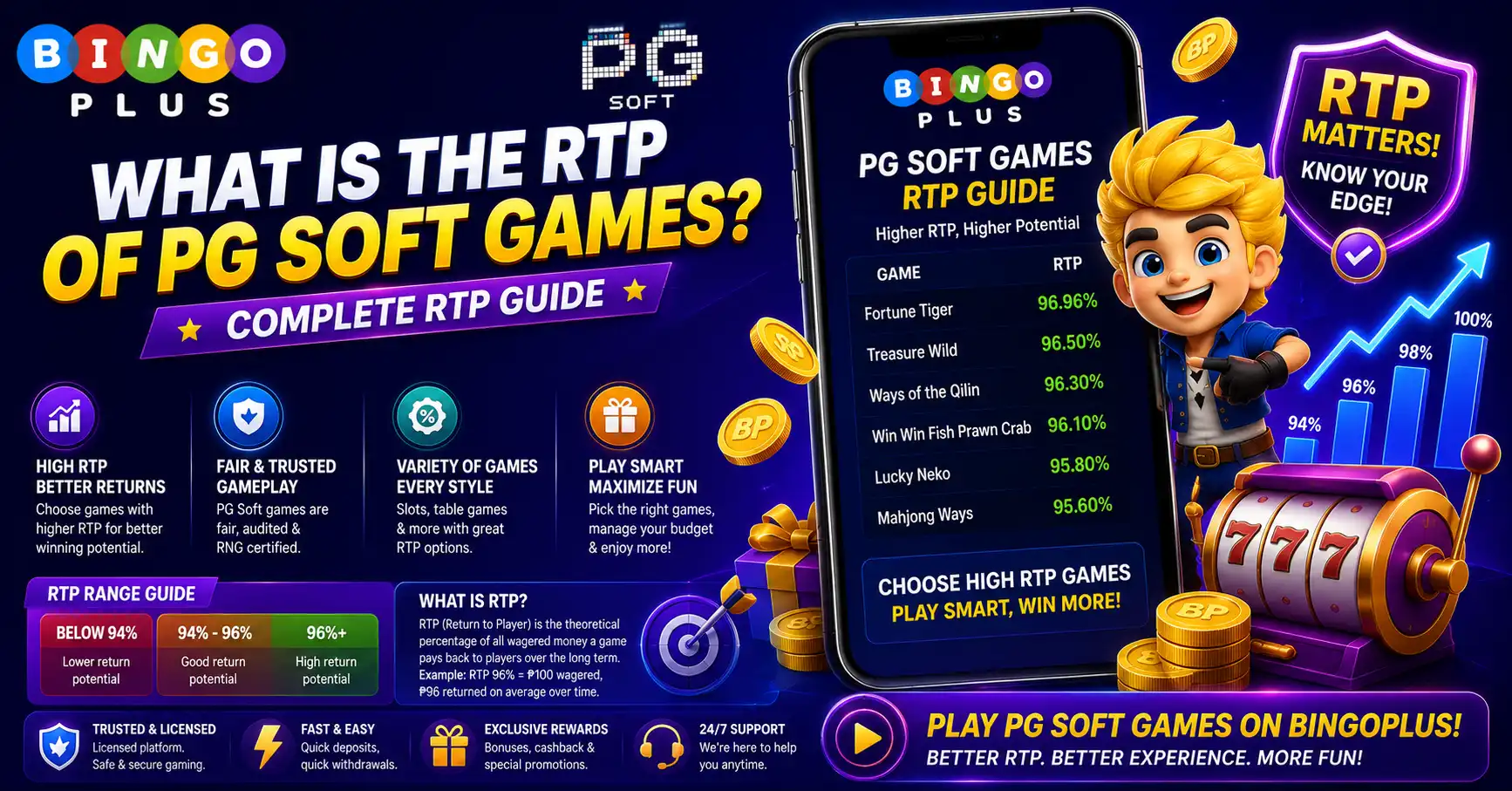
The RTP (Return to Player) of PG Soft games varies by title, but most games typically feature theoretical RTP values ranging from approximately 94% to 97%, with some popular slots offering RTPs above 96%. RTP is an important statistic because it estimates the long-term percentage of wagers that a game may return to players over millions of spins.
However, RTP does not guarantee short-term results. Individual gaming sessions are determined by Random Number Generator (RNG) technology, meaning every spin is independent. Understanding RTP alongside volatility, bonus features, and bankroll management helps players choose PG Soft games that best match their preferences.

Core Question Explained
What does RTP mean?
RTP stands for Return to Player. It represents the theoretical percentage of all wagers that a slot game returns to players over an extended period.
For example:
- RTP 96.00% = Theoretical return of ₱96 for every ₱100 wagered over the long term.
- RTP 95.00% = Theoretical return of ₱95 over the same period.
- Click to spin for free and win the ultimate prize!
Actual results during individual sessions will always vary because every outcome is random.
What is the average RTP of PG Soft games?
Most PG Soft slots generally fall within these ranges:
- 94%–95%: Lower RTP games
- 95%–96%: Average RTP games
- 96%–97%+: Higher RTP games
Some titles may have multiple RTP configurations depending on the online casino platform.
Does every PG Soft game have the same RTP?
No.
Each game has its own certified RTP. Operators may also choose from approved RTP settings provided for certain titles, meaning the same game could display different RTP values at different licensed casinos.
Always check the game’s information screen before playing.
User Experience, Pros and Cons
Why do players care about RTP?
Higher RTP games generally provide better theoretical long-term returns. Although they cannot guarantee profits, they may help reduce the house edge over extended gameplay.
Many experienced players compare RTP before selecting a slot.
Advantages
- Easy to compare games
- Helps estimate long-term value
- Available in most game information panels
- Useful for bankroll planning
- Often combined with volatility information
Disadvantages
- Does not predict short-term wins
- Cannot guarantee profitability
- Different casinos may use different RTP configurations
- Bonus features influence actual gameplay variance
Players should evaluate RTP together with game mechanics instead of relying on one statistic alone.
Practical Tips
Check the paytable first
Open the game’s information or help menu before playing.
Review:
- RTP
- Volatility
- Maximum payout
- Bonus features
- Winning combinations
Understand volatility
High RTP does not always mean frequent wins.
Low volatility:
- Smaller but more frequent payouts
Medium volatility:
- Balanced gameplay
High volatility:
- Less frequent wins
- Potentially larger payouts
Compare multiple PG Soft games
Instead of choosing only by theme, compare:
- RTP percentage
- Feature variety
- Bonus rounds
- Jackpot potential
- Betting limits
Play responsibly
RTP represents a long-term mathematical average.
Set a budget before playing and avoid increasing wagers simply because a game has a higher RTP.
Frequently Asked Questions
1. What is the RTP of PG Soft games?
Most PG Soft games generally offer theoretical RTP values ranging from approximately 94% to 97%, depending on the title and casino configuration.
2. Does a higher RTP guarantee bigger winnings?
No. RTP reflects long-term theoretical returns and does not guarantee results during individual sessions.
3. Where can I find the RTP of a PG Soft game?
Open the game’s paytable or information section, where RTP is typically displayed alongside the game rules.
4. Do all PG Soft games have the same RTP?
No. Every title has its own RTP, and some games may support multiple certified RTP configurations.
5. Why can the same PG Soft game have different RTP values?
Licensed casino operators may choose from approved RTP settings available for certain games.
6. Is RTP more important than volatility?
Neither is more important. RTP estimates long-term returns, while volatility describes how often and how much games typically pay.
7. What is considered a good RTP for PG Soft games?
Many players consider RTP values of 96% or higher to be competitive, although personal preferences and game features also matter.
8. Can RTP improve my chances of winning?
Not directly. RTP influences long-term expected returns but cannot predict or affect individual spins.
9. Are PG Soft RTP values independently tested?
Yes. Licensed versions of PG Soft games are typically certified and tested to ensure their RTP matches approved regulatory standards.
10. Should beginners pay attention to RTP?
Yes. Comparing RTP alongside volatility and bonus features helps beginners choose games that match their playing style.