


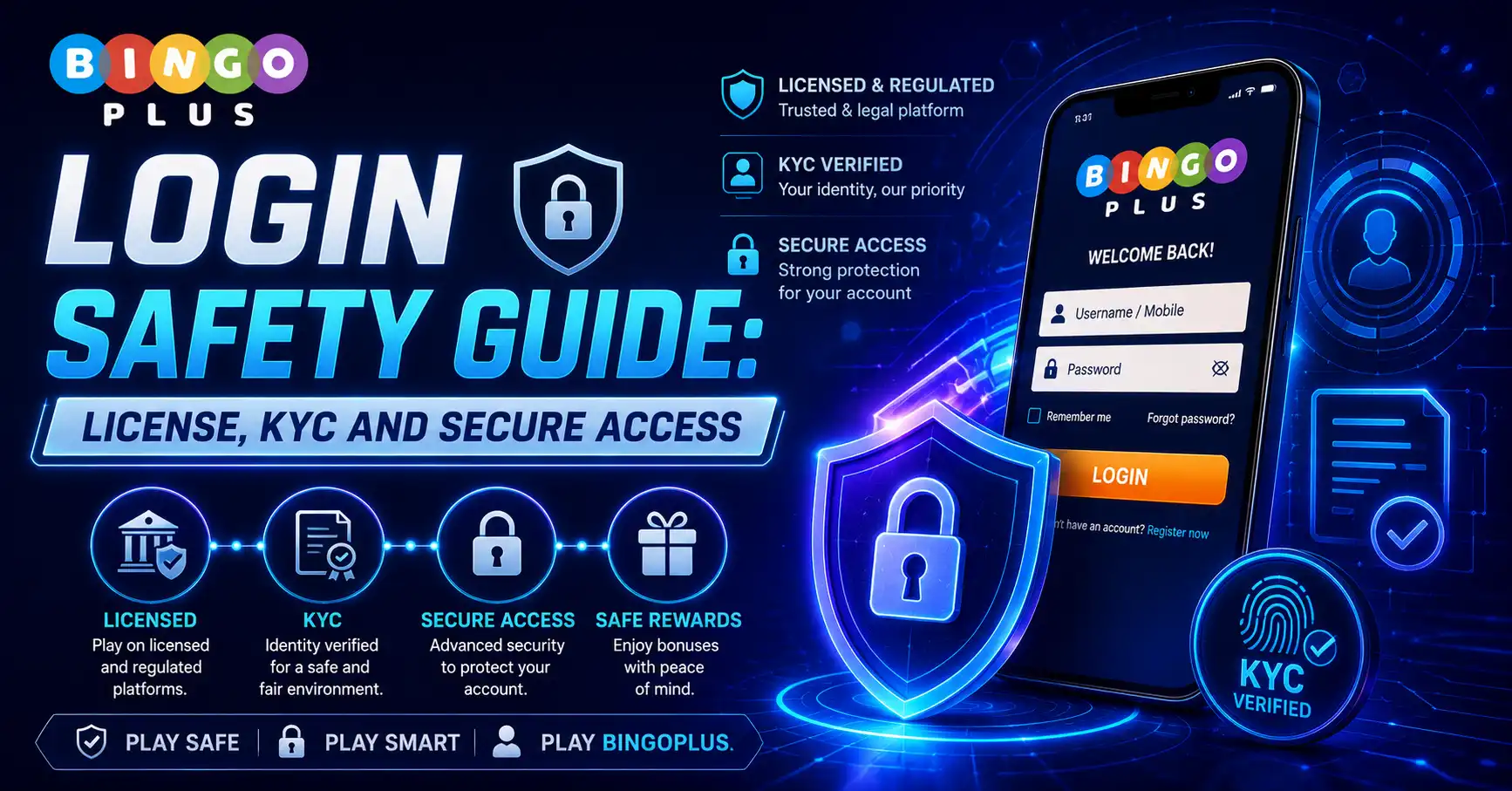
Login safety is one of the most ignored parts of online gaming. Many players spend time comparing bonuses, game libraries, and payment methods, but they enter account details on the first page that looks familiar.
That is risky.

A fake login page can copy a logo, steal credentials, redirect deposits, and create withdrawal problems before the player even reaches the real platform.
When I review login safety, I use three gold standards:
- License and registered domain
- Secure login flow, KYC, and payment ownership
- Game math, RTP, bonus rules, and withdrawal limits
- Click to spin for free and win the ultimate prize!
Bet responsibly, live a wonderful life. Online gaming carries financial risk, and every player is responsible for their own account, deposits, wagers, and withdrawals.
Authoritative Licensing and Safety
A safe login journey starts before the username and password field.
The first step is domain verification.
If the domain is wrong, everything after that is unsafe.
Why Login Safety Starts With Licensing
A gambling license can help protect players through:
- Operator accountability
- Registered company information
- Approved gaming domains
- KYC identity verification
- Anti-money laundering controls
- Payment monitoring
- Responsible gaming requirements
- Game compliance expectations
A license does not guarantee winnings.
It gives players a stronger basis for checking whether the platform and access point are legitimate.
PAGCOR and Official Domain Verification
For players in the Philippines, PAGCOR is one of the main regulatory references.
PAGCOR’s List of Service Providers and Registered Domains/URLs as of 18 March 2025 lists service providers, game offerings, brand names, and registered domains or URLs. The document includes categories such as Traditional Bingo Games, Electronic Casino Games, Electronic Bingo Games, Sports Betting, Specialty Games, Numeric Games, and Online Poker Games.
That matters because login safety depends on the exact domain.
A fake page can imitate:
- Brand colors
- App buttons
- Login forms
- Bonus banners
- Support chat boxes
- KYC prompts
- Download links
- Payment instructions
A verified domain is harder to fake than a screenshot or logo.
Example of Domain-Level Verification
The PAGCOR list shows AB Leisure Exponent, Inc. with Traditional Bingo Games, the Bingo Plus brand group, and registered domains including https://bingoplus.ph/, https://bingoplus.com/, lucky.bingoplus.com, fun.bingoplus.com, and play.bingoplus.com.
This does not mean every page using similar branding is official.
It means users should compare the exact login address against trusted records before entering account details.
That is the safest starting point.
What a Registered Domain Can and Cannot Prove
A PAGCOR-registered domain can help confirm:
- The platform appears in a public regulatory document.
- The brand is linked to a listed service provider.
- The URL has a stronger legitimacy signal.
- The player has a clearer starting point for verification.
It cannot guarantee:
- You will win.
- Withdrawals will be instant.
- A copied login page is safe.
- A bonus has real value.
- A mirror site is official.
- KYC can be skipped.
A legal platform can still enforce strict account, payment, and withdrawal rules.
That is normal.
License Types and Login Risk
Not every license gives the same practical protection.
I usually classify them like this:
- Strong local license: Better for local users because domains, payments, and complaints are easier to trace.
- Recognized international license: Useful when the regulator publishes records and handles disputes.
- Light offshore license: May provide legal coverage, but player protection can be weaker.
- No visible license: High risk, especially when login pages and payment routes are unclear.
For Philippine users, a PAGCOR-registered domain is a strong local safety signal.
Still, I also check HTTPS, account recovery, KYC, payment rules, and support quality.
Login Safety Checklist Before Signing In
Before entering credentials, check:
- Does the exact domain match an official or regulatory source?
- Is the page using secure HTTPS?
- Is the brand name spelled correctly?
- Are there strange pop-ups or forced redirects?
- Does the page ask for unnecessary permissions?
- Is account recovery visible?
- Is support easy to find?
- Are KYC and payment rules explained?
If the page feels rushed, copied, or unclear, I stop.
A safe login page should reduce doubt, not create it.
Account Security, KYC and Payment Protection
Login safety is not only about passwords.
It also connects to identity, payment ownership, and withdrawal approval.
A secure login flow should protect both the account and the money path.
What a Safe Login Flow Should Include
A safer online gaming login page should provide:
- Clear account fields
- Secure password handling
- Mobile number or email verification
- Account recovery options
- Simple error messages
- No unrelated redirects
- Session timeout protection
- Visible support access
Good login design is not only about convenience.
It reduces credential theft and account confusion.
Common Login Red Flags
I avoid login pages that show:
- Misspelled brand names
- Strange domain extensions
- Shortened links
- Forced APK downloads before login
- Pop-ups asking for wallet details
- Fake “account locked” warnings
- Support agents asking for passwords
- Login forms inside random social media pages
No real support team should ask for a password.
No safe platform should require a user to send credentials through chat.
Why KYC Matters
KYC means Know Your Customer.
A regulated platform uses KYC to verify:
- Player identity
- Age eligibility
- Payment account ownership
- Duplicate account risk
- Anti-fraud controls
- Responsible gaming compliance
KYC may slow down withdrawals.
That does not make it suspicious by itself.
In regulated gaming, identity checks are normal.
How to Avoid KYC Delays
Before depositing, make sure:
- Your registered name matches your valid ID.
- Your phone number is active.
- Your payment account belongs to you.
- Address or profile details are consistent.
- You have not created duplicate accounts.
- You understand bonus rules.
- You know the withdrawal limits.
Most avoidable delays come from mismatched information.
A legal platform will usually be strict about identity and payment ownership.
Payment Ownership and Login Safety
A secure login account should match the payment account.
Problems often appear when:
- The gaming account uses one name.
- The e-wallet or bank account uses another name.
- The ID has a different spelling.
- The user deposits from a friend’s wallet.
- The user creates multiple accounts.
- The account is accessed from suspicious devices.
These issues can trigger manual review.
A safe player keeps login, KYC, and payment details consistent from the start.
Game Mathematics and Rules
Login safety protects the account.
Game math protects expectations.
A licensed platform can still be risky if users misunderstand RTP, RNG, volatility, and bonus rules.
What RTP Means
RTP means Return to Player.
If a game has 96% RTP, it is designed to return about ₱96 for every ₱100 wagered over a very large sample size.
That does not mean a player gets ₱96 back today.
Short-term results can be very different.
What RNG Means
RNG means Random Number Generator.
It creates random game outcomes within the game’s mathematical design.
A proper RNG means:
- Previous rounds do not control future rounds.
- Betting patterns cannot force wins.
- “Guaranteed win” systems are false.
- Modified apps are dangerous.
- Random outcomes can create long losing streaks.
- A login-safe account still needs bankroll control.
If someone sells a “system” that predicts RNG results, I treat it as a scam.
Baccarat Example: Login Safe Does Not Mean Bet Safe
Baccarat is useful because the main bets are easy to compare.
Typical long-term RTP estimates are:
- Banker bet: around 98.94% RTP
- Player bet: around 98.76% RTP
- Tie bet: often around 85% RTP, depending on table rules
The Banker bet usually has the lowest house edge.
The Tie bet looks attractive because it pays more, but its math is weaker.
My baccarat rules:
- Prefer Banker or Player over Tie.
- Avoid streak chasing.
- Use flat betting.
- Set a session budget.
- Stop when the limit is reached.
A secure login protects your account.
It does not change the game odds.
Slot Volatility and Account Reload Risk
Slots can be dangerous on mobile because sessions move fast.
A slot may show 96% RTP, but volatility changes the experience.
- Low volatility: smaller wins, more frequent hits
- Medium volatility: balanced payout pattern
- High volatility: longer dry runs, larger possible wins
High-volatility games can drain a balance quickly.
A user with easy login access may reload too often.
That is why session limits matter.
Simple Bankroll Method After Login
I use a unit-based method.
Example:
- Session budget: ₱1,000
- Unit size: ₱10
- Total units: 100
- Stop-loss: ₱1,000
- Stop-win: decided before play
This does not beat the game.
It helps prevent emotional reloads after a fast login.
Bonus Mechanism Breakdown
Many users log in because they see a promotion.
That is where risk increases.
A large bonus can look attractive, but the real value depends on wagering requirements, contribution rates, expiry periods, max bet rules, and withdrawal caps.
What Wagering Requirements Mean
Wagering requirements tell you how much you must bet before bonus-related funds can be withdrawn.
Example:
- Deposit: ₱1,000
- Bonus: ₱1,000
- Rule: 10x bonus
- Required turnover: ₱1,000 × 10 = ₱10,000
Now compare a harsher rule:
- Deposit: ₱1,000
- Bonus: ₱1,000
- Rule: 30x deposit + bonus
- Required turnover: ₱2,000 × 30 = ₱60,000
Same bonus headline.
Very different real burden.
How to Calculate Real Bonus Value
Use this formula:
Real Bonus Value = Bonus Amount − Expected Loss During Wagering
Example:
- Bonus amount: ₱1,000
- Required wagering: ₱30,000
- Average game RTP: 96%
- House edge: 4%
- Expected loss: ₱30,000 × 4% = ₱1,200
In this example, the expected loss is higher than the bonus.
The promotion may still produce a short-term win.
Mathematically, it is weaker than it looks.
Contribution Rates Can Break the Bonus
A platform may apply different contribution rates:
- Slots: 100%
- Bingo-style games: 100%
- Roulette: 20%
- Baccarat: 10%
- Blackjack: 5%
- Some jackpot or specialty games: 0%
If you wager ₱10,000 on a game with 10% contribution, only ₱1,000 may count toward the requirement.
This is one of the most common bonus traps.
A login page may lead you to a promotion.
The terms decide whether it has value.
Bonus Red Flags After Login
I avoid promotions with:
- Hidden wagering rules
- Very high turnover requirements
- Short expiry periods
- Low maximum withdrawal caps
- Unclear eligible games
- Maximum bet rules buried in fine print
- Support teams that cannot explain cashout rules
- Offers sent only through unofficial links
A safe bonus is not the largest one.
It is the one with rules that are visible and realistic.
How I Personally Review Login Safety
My review process is risk-first.
I do not start with the promotion.
I start with access.
My order is:
- Verify the exact domain.
- Check license and regulatory footprint.
- Confirm HTTPS and brand consistency.
- Review login and recovery options.
- Check KYC requirements.
- Review payment ownership rules.
- Read withdrawal limits.
- Check RTP and game rules.
- Calculate bonus wagering value.
- Test support clarity.
If the login page fails the domain check, I stop.
No bonus is worth entering credentials on the wrong page.
FAQ
How do I know if a casino login page is safe?
Check whether the exact domain appears in PAGCOR’s registered-domain list or another official source. Do not trust a login page only because it uses a familiar logo.
How can I complete KYC faster after login?
Use your real name, upload a clear valid ID, verify your mobile number, and make sure your payment account matches your registered details.
Does a safe login page mean the games are safe to win?
No. A safe login page protects account access, but game results still depend on RTP, RNG, volatility, bet size, and bankroll discipline.
Final Expert View
A safe login journey is the first layer of player protection.
If the domain is wrong, the license is unclear, or the page asks for unusual account details, the risk starts before the first bet.
For Philippine users, start with the PAGCOR registered-domain list, then check HTTPS, KYC, payment rules, withdrawal limits, and bonus terms before depositing. Treat online gaming as entertainment, set limits, and never risk money you cannot afford to lose.